Minimalist Practices to Start in the New Year
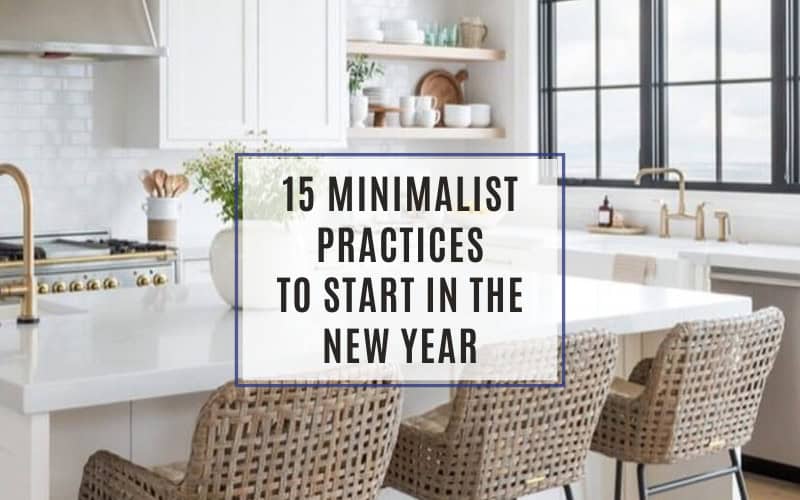
The New Year is such a great time to reset your home, your routines, and even the way you think about everyday life. When I first began simplifying, I thought I’d declutter a few things and move on.
I had no idea it would completely shift the way my family lives. Today I’m sharing 15 minimalist practices you can start in the New Year, all things that changed our home, our habits, and, honestly, our entire mindset.
Minimalism didn’t just clear my house. It cleared space in my schedule, my budget, and my brain. These practices are simple, but together they create major change.
15 Minimalist Practices to Start in the New Year
1. Simplify What You Carry Day-to-Day
A new year is the perfect time to rethink what you carry with you. Before minimalism, I hauled around a giant, heavy purse full of “just in case” items. I loved bags and owned ten or more inexpensive ones, but they all took up space.
Once I began decluttering, I finally tackled my purse. I realized most of the items I was carrying daily were never used. Hairbrush? Wipes? Random lotions? They were just weighing me down.
The New Year Challenge:
Do a “purse reset.” Try carrying only the essentials for a month: wallet, keys, phone, chapstick, hair tie, and maybe sunblock in summer. Everything else can go in a small “backup bag” in your car. It’s amazing how freeing this feels.
2. Clear Your Surfaces and Keep Them Clear
Start the year by choosing one space, your kitchen counters, bathroom sink, or nightstand, and removing everything that doesn’t need to live there. At first, blank space can feel strange because we’re used to seeing clutter. But soon you’ll love how calm and functional a clear surface feels.
Now my whole family notices when something is left out. One item on the counter instantly looks messy. When you experience clear spaces, you don’t want to go back.

3. Shop Less and Become More Intentional
If you want to feel lighter in the New Year, this is one of the biggest shifts you can make.
When I started decluttering, it hit me quickly that there was no point in decluttering if I was going to keep getting more stuff. Even though I wasn’t a huge shopper, I had a habit of picking up “cute” little extras, especially for my boys. But those “why not?” items add up.
Every extra item requires storage, maintenance, and eventually… more decluttering.
The New Year Challenge:
Try a shopping pause for January. Only buy what is truly needed. You’ll be surprised how much easier minimalism becomes when less is coming through the door.
4. Use Minimalism to Save More Money
As you shop less in the New Year, you naturally spend less, and that opens the door to more financial freedom.
Minimalism shifted the way I think about money. Everything we buy is something we traded time for. And buying less means saving more for what truly matters: fun experiences, family activities, or future goals.
Experiences shape your life. Stuff doesn’t.

5. Try the One-In-One-Out Rule
A great New Year’s habit is the one-in, one-out approach. Any time something new enters your home, something similar leaves.
You can also take it up a level with the only replace rule: don’t buy anything unless it’s replacing something worn out or outgrown.
This keeps your home from filling up with “future” items and helps you stay focused on what you actually use right now.
6. Start Small Eco-Friendly Habits
Minimalism naturally leads to eco-friendly living because you become more aware of what you use and what you waste. In the New Year, try adding one eco-conscious habit at a time.
I started by hiding our paper towels and using them only for true emergencies. When we ran out, I switched to bamboo paper towels—and now I buy maybe one roll every six months.
Other small changes we’ve made over time:
-
No more plastic water bottles
-
Buying fewer packaged drinks
-
Using reusable bags and produce bags
-
Choosing glass over plastic
-
Switching to reusable straws
We’re not zero-waste, but the New Year is a great time to begin small, doable swaps.
7. Simplify Food and Meal Routines
January is a wonderful month to simplify the way you eat. Minimalism made me rethink my food habits, and I realized I wanted meals that were easy, healthy, and predictable.
Now I eat the same thing for breakfast and lunch every day. It removes decision fatigue completely. For dinner, we rotate about seven meals, simple, healthy, and realistic.
Simplifying food saves time, money, and mental energy.

8. Create More Family Time by Owning Less
With fewer toys and less clutter, our home takes less time to manage. As a mom, this was huge. I used to spend half my day picking up toys. Now we spend more time actually playing and enjoying our home.
Minimalism also made me think about how I spend my evenings. Do I want to watch TV? Read? Work on something creative? The New Year is a great time to reevaluate how you spend your time and choose what feels genuine.
9. Release the Pressure to Be Productive 24/7
A fresh start in the New Year doesn’t mean cramming your schedule full. Minimalism taught me that slow days are okay. Rest matters. A home doesn’t need to be spotless to be meaningful.
Now I create simple daily goals, and if I don’t get to everything, that’s okay. Letting go of the pressure to “do it all” is one of the most freeing parts of minimalism.
10. Reduce Screen Time and Be More Present
One of my favorite New Year practices is screen-free Sundays. No computer, no phone except calls/texts, no TV, and no scrolling.
The first Sunday felt amazing. I painted my kitchen, we went to the park, and I didn’t miss anything online. After three weeks, I realized nothing urgent ever happens on social media. Everything will still be there on Monday.
It’s a simple way to reset your mind and reconnect with what matters.
Another interesting experiment is taking all the social media apps off your phone. It is amazing how much time you will get back!

11. Do a January Digital Declutter
The New Year is the best time to get rid of the digital clutter you’ve ignored all year. Too many apps, endless photos, random screenshots, and constant notifications create mental noise.
Spend one afternoon deleting old apps, clearing out your camera roll, organizing your desktop, and unsubscribing from marketing emails you never read.
A cleaner digital space brings the same calm as a decluttered home.
12. Choose a Simple Daily Uniform
A minimalist wardrobe doesn’t mean owning only five pieces; it means making getting dressed easier.
Try choosing a “daily uniform” for the first few months of the year. It could be leggings and a cozy sweater, jeans and a tee, or whatever you love.
When you remove decision fatigue from your mornings, your whole day feels lighter.
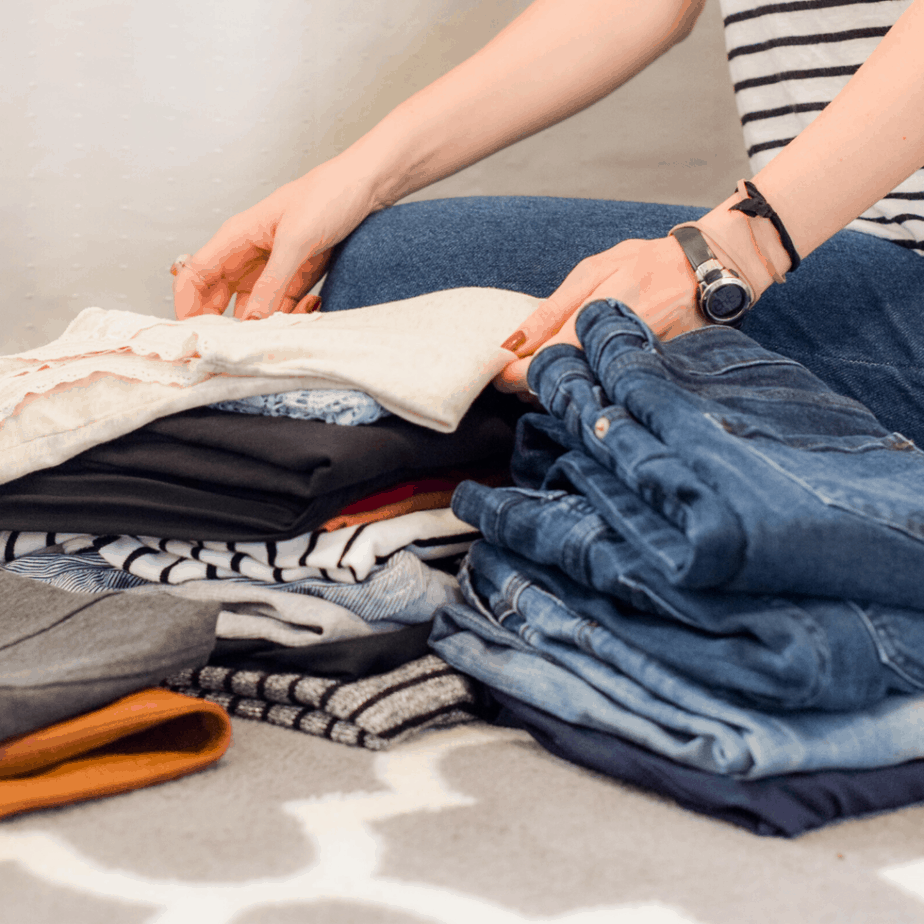
13. Create a Donation Station in Your Home
Set up one small basket or bin for donations in an easy-to-access place, like a closet or laundry room. This gives your family a place to put items they no longer want or use.
A donation station helps you declutter all year long without waiting for a big purge.
It’s a simple system that keeps your home flowing instead of filling.
14. Practice “Pause Before Purchasing”
One of the most helpful habits to start in the New Year is learning to pause before you buy anything.
When you feel the urge to purchase something, pause for 24 hours (or longer). Ask yourself:
-
Do I already own something that works?
-
Will this actually improve my life?
-
Will I still want it next month?
Most impulse buys disappear when you give yourself time to think.

Clean the kitchen every night!
15. Start a Simple Evening Reset Routine
Minimalism is not just about decluttering; it’s about peaceful rhythms.
Try a nightly 10–15 minute reset: clear the counters, put away stray items, prep something small for the next morning.
This tiny habit makes mornings smoother and prevents clutter from building up.
It’s one of the simplest but most effective minimalist practices you can start in the New Year.
Simplify In The New Year
Starting the New Year with a few simple minimalist practices can completely change how your home feels and how you move through your days. Minimalism isn’t about owning the least; it’s about creating more room for what matters most.
When you carry less, buy less, simplify your routines, and protect your time, life naturally feels calmer and more intentional.
You don’t need to do everything at once. Choose one or two habits to start with and let them build over time. Before you know it, your home will feel lighter, your days will feel easier, and you’ll step into the new year with more clarity, purpose, and peace. Minimalism really is one of the most life-changing gifts you can give yourself.
If you try any of these practices, let me know which one resonates the most. Here’s to a slower, simpler, and more meaningful year ahead.