Home Organization Ideas On A Budget
How to Make Your Home Function Better Without Spending a Lot of Money
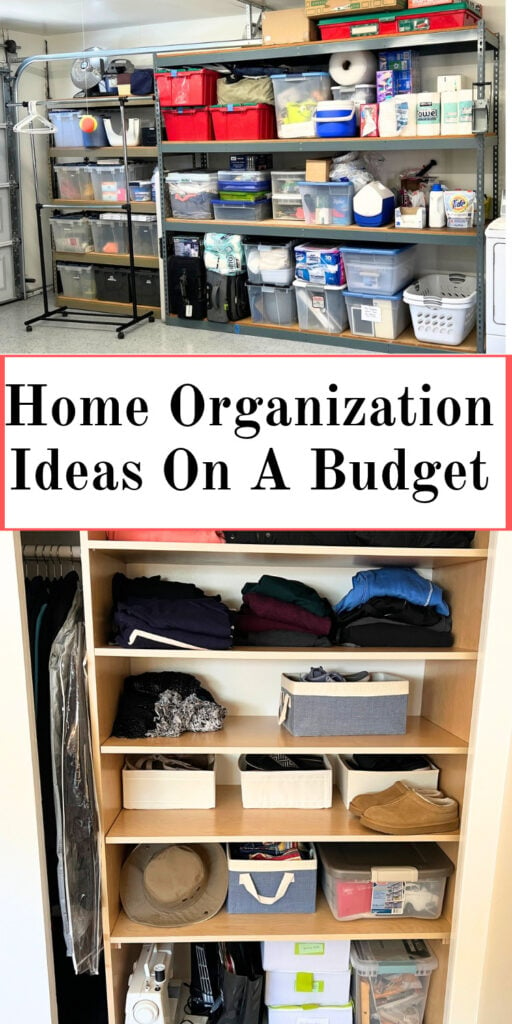
Have you ever looked around your home and felt like something just wasn’t working? Here are 12 organization ideas on a budget.
Maybe your kitchen feels too crowded, you don’t have enough storage, or you constantly find yourself moving things around just to get through your daily routine.
Sometimes we assume the solution is to buy more furniture, install new cabinets, or even renovate an entire room. But what if you could make your home function better simply by using what you already have?
I’ve been learning that one of the best ways to improve a home is to declutter, rethink how each space is being used, and rearrange what you already own.
Recently, I’ve been helping my friend declutter and reorganize her home. What started as a kitchen decluttering project has turned into something much bigger. We’re rethinking how her rooms function, moving furniture between spaces, and finding creative ways to solve storage problems without spending much money.
And it’s reminded me that you don’t necessarily need a bigger house or a large renovation budget to create a home that works better for your life.
Here are some simple ways to make your home more functional, organized, and enjoyable without spending a fortune.
1. Start by Identifying What’s Not Working
Before you start moving furniture or buying organizing products, take a moment to think about what is actually bothering you about your home.
Sometimes we get so used to living in a certain way that we don’t even notice the little inconveniences anymore.
Maybe you have to walk around a piece of furniture every time you enter the kitchen. Maybe your pantry is overflowing while another cupboard is barely being used. Or perhaps you have a room filled with things you no longer need, while another area of your home desperately needs more storage.
Ask yourself a few questions:
- Which areas of my home feel frustrating to use?
- Where do things constantly pile up?
- Do I have furniture that’s taking up more space than it’s worth?
- Are there storage areas being used for things I no longer need?
- Could rearranging furniture make everyday activities easier?
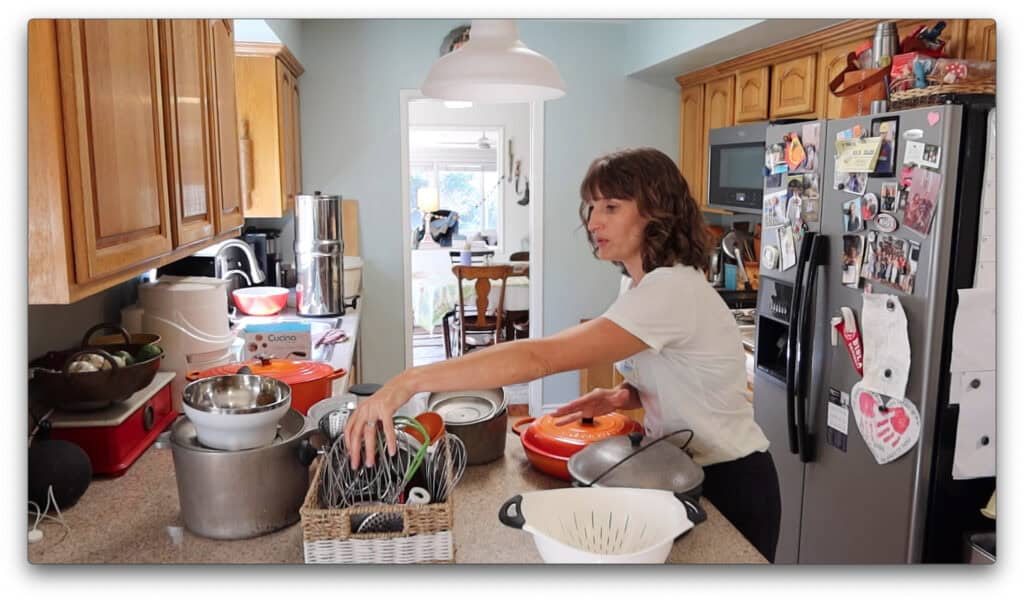
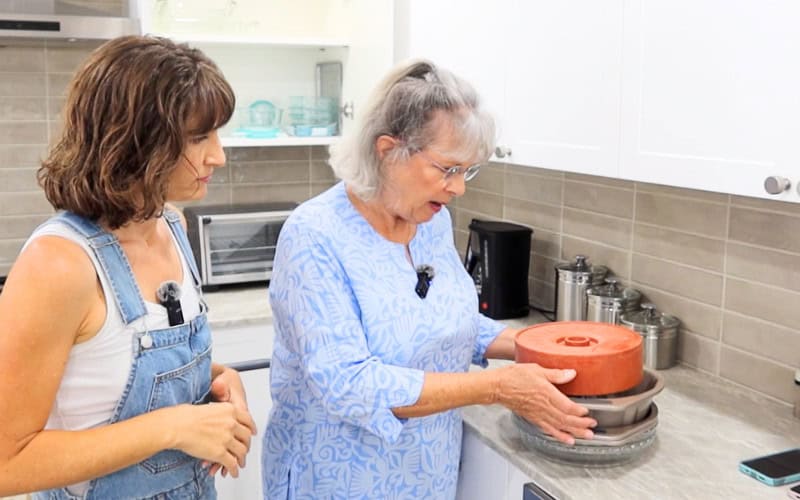
When we were working in my friend’s kitchen, one of the biggest problems was the layout. There wasn’t enough convenient pantry storage, and the refrigerator’s location made the walkway feel crowded.
Instead of immediately thinking about installing new cabinets, we started looking around her home for other possibilities.
That leads to my next tip.
2. Shop Your Own Home Before Buying Anything New
One of my favorite ways to improve a room on a budget is to shop my own home.
This simply means looking at furniture, baskets, shelves, and storage containers you already own and considering whether they might work better somewhere else.
We often think of furniture as belonging to one specific room. A dining room cabinet belongs in the dining room, a bookshelf belongs in the living room, and a dresser belongs in the bedroom.
But there really aren’t any rules!
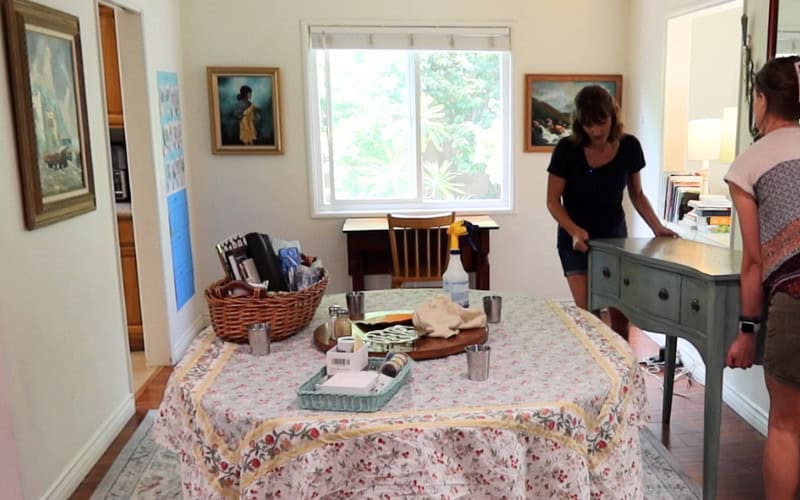
A bookshelf could become pantry storage. A dresser could hold craft supplies. A dining room hutch might work beautifully in a hallway or living room.
While helping my friend, we found a large cupboard that was being used to store supplies from a business she no longer operated. Once we decluttered those supplies, the cupboard was completely available for a new purpose.
We decided to move it into the kitchen and turn it into a pantry.
Not only did this solve a storage problem, but it also allowed us to reuse a piece of furniture she already owned.
Before buying something new, walk through your home and ask yourself whether anything you already have could solve the problem.
You might be surprised by what you find.
3. Declutter Things That Belong to a Previous Season of Life
This is something I think almost everyone can relate to.
Over the years, we accumulate things for hobbies, jobs, businesses, interests, and activities that were once important to us.
But our lives change.
Maybe you used to scrapbook, sew, or make crafts. Perhaps you had a home business, collected certain items, or enjoyed a hobby you no longer have time for.
Even when we’re no longer using these things, it can be difficult to let them go because they remind us of a different time in our lives.
My friend had an entire cupboard filled with supplies from a business she used to run. She had enjoyed that business, and part of her still wondered whether she might return to it someday.
But with a busy job and three kids, she realized it wasn’t something she had time for right now.
Instead of forcing herself to get rid of everything, we went through the supplies and decided what was actually worth keeping.
Some things could be used around her home, some could be donated, and a smaller collection of supplies could be saved in one container.
I think this is a great approach when you’re struggling to let go of something.
You don’t always have to make an all-or-nothing decision.
Sometimes setting a reasonable storage limit allows you to keep the things that matter most while reclaiming valuable space.
And remember, letting go of supplies from an old hobby doesn’t mean you can never enjoy that hobby again.
It simply means you’re making room for the life you’re living today.

4. Give Every Storage Space a Purpose
One of the biggest problems I see when helping people declutter is that storage spaces often become places where random things end up.
A cupboard might start out holding kitchen supplies, but over time it becomes filled with paperwork, old hobbies, decorations, and things nobody knows what to do with.
Eventually, we run out of space for the things we actually use.
A simple way to improve your home’s functionality is to assign each storage area a specific purpose.
For example:
- Kitchen cupboards should hold items used for cooking, eating, and food storage.
- Linen closets should primarily hold towels, sheets, and related supplies.
- Entryway storage should contain items you need when leaving the house.
- Craft storage should hold supplies for hobbies you currently enjoy.
- Pantry storage should make food easy to find and access.
Of course, every home is different, and sometimes we need to get creative.
The important thing is that the storage system makes sense for how you live.
When we emptied my friend’s cupboard, we weren’t just creating an empty space. We were creating an opportunity to use that furniture for something she needed much more: a functional pantry.
Sometimes the best organizing solution isn’t adding more storage. It’s changing what you’re storing and where you’re storing it.
5. Rethink Your Furniture Layout
One of the easiest ways to make a room feel completely different is to rearrange the furniture.
And the best part is that it doesn’t cost anything.
We tend to place furniture in a certain spot when we first move into a home and then leave it there for years.
But just because something has always been in one place doesn’t mean it’s the best location.
Think about how you move through your rooms.
Can you easily walk from one area to another? Are you constantly squeezing past furniture? Does a large piece block access to something you use frequently?
In my friend’s kitchen, we realized that moving the refrigerator could open up the walkway and create a better layout.
It was a bigger project than we initially expected, but once we moved it, the kitchen felt much more open.
Even though the refrigerator was now a couple of steps farther away, the improved walkway made the kitchen easier to use.
Sometimes we focus too much on keeping everything in its traditional location instead of thinking about how a room actually functions.
Try moving things around and seeing what happens.
You can always move them back!
One important note: Before moving large appliances, check electrical connections, plumbing, ventilation requirements, and manufacturer clearances. What looks like a simple furniture rearrangement may require professional assistance.
6. Use Vertical Space and Adjustable Shelving
If you’re struggling with storage, take a look at how you’re using the height of your cupboards and closets.
Sometimes we have plenty of storage space, but it’s not arranged efficiently.
For example, you might have tall shelves with lots of wasted space above shorter items. Or perhaps the shelves are so close together that larger appliances don’t fit.
Adjustable shelving can make a huge difference.
When we turned my friend’s cupboard into a pantry, we needed to reposition the shelves to accommodate the items she planned to store.
This was a simple change, but it made the cupboard much more useful.
You can apply this idea throughout your home.
Try adjusting existing shelves, using shelf risers where appropriate, or grouping items by height so you’re making better use of the space available.
You don’t necessarily need a bigger cupboard. You might just need a better arrangement.
7. Create Storage for Things You Don’t Use Every Day
Not everything in your home needs to be immediately accessible.
One way to make your kitchen or living space feel less crowded is to move occasional-use items out of your primary storage areas.
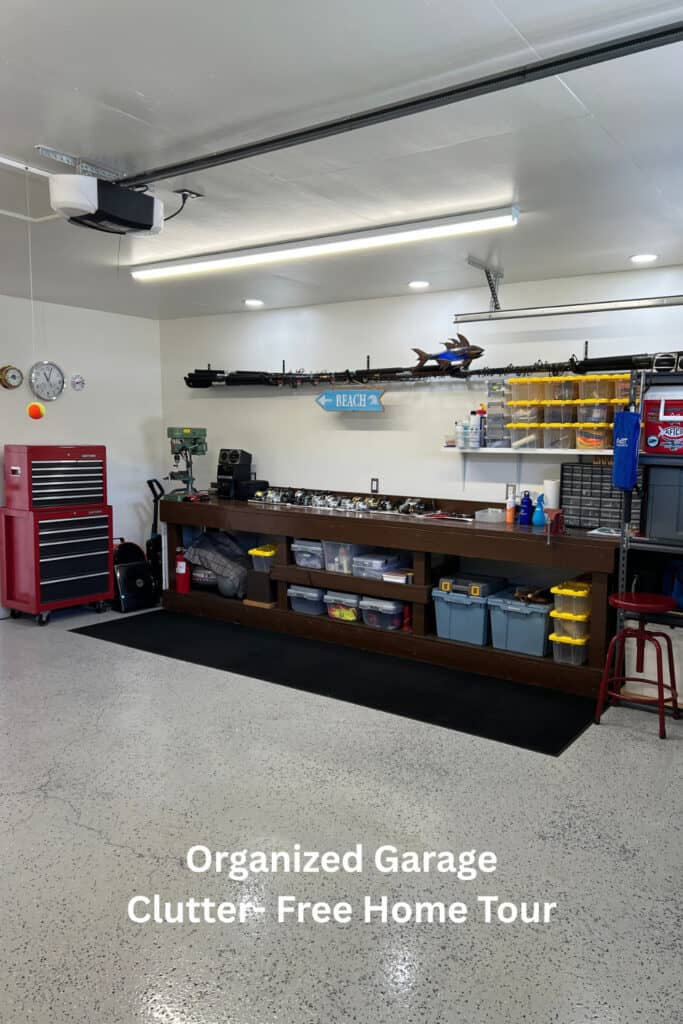
For example, large kitchen appliances can take up a lot of valuable cupboard and countertop space.
If you only use your slow cooker, stand mixer, or pressure cooker occasionally, consider storing it somewhere nearby rather than keeping it on the counter.
My friend found an affordable secondhand rolling kitchen cart that she could use for larger appliances.
This gave those items a designated home while freeing up space in her kitchen.
The goal isn’t to hide everything away or make your home inconvenient.
It’s to keep the things you use most often within easy reach and give everything else a sensible storage location.
This small change can make daily routines much easier.
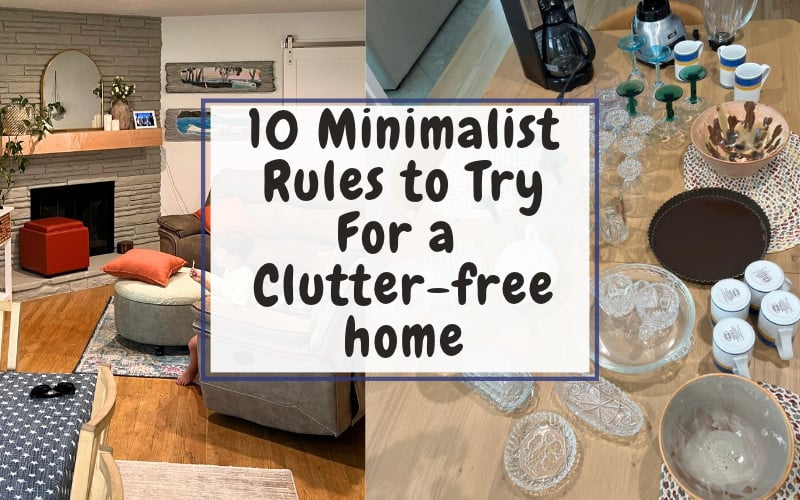
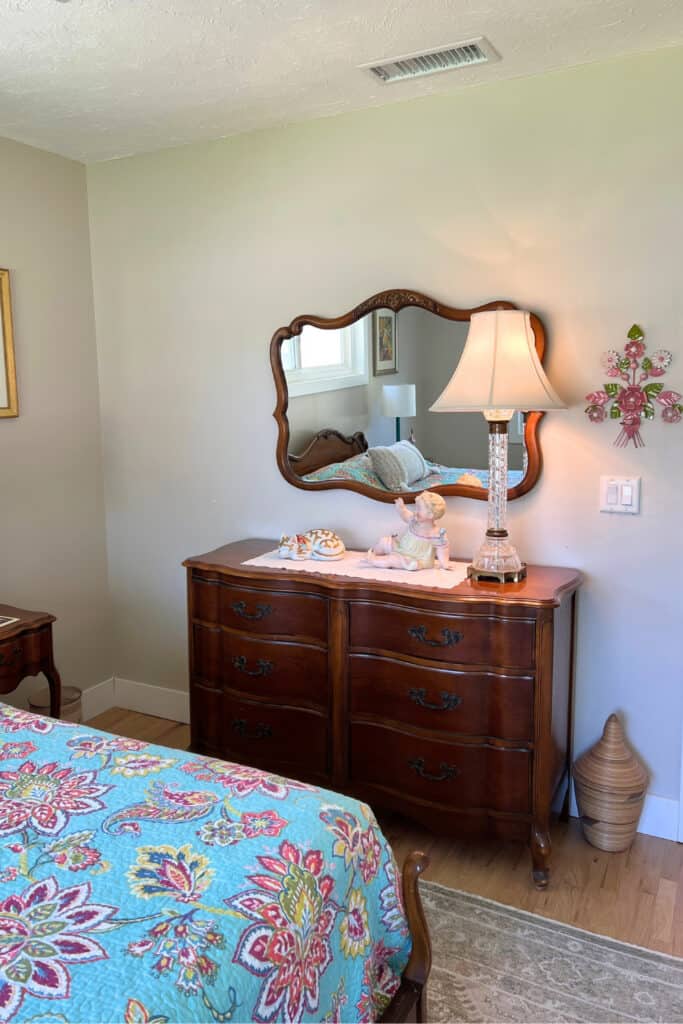
8. Reduce Visual Clutter to Make Your Home Feel Calmer
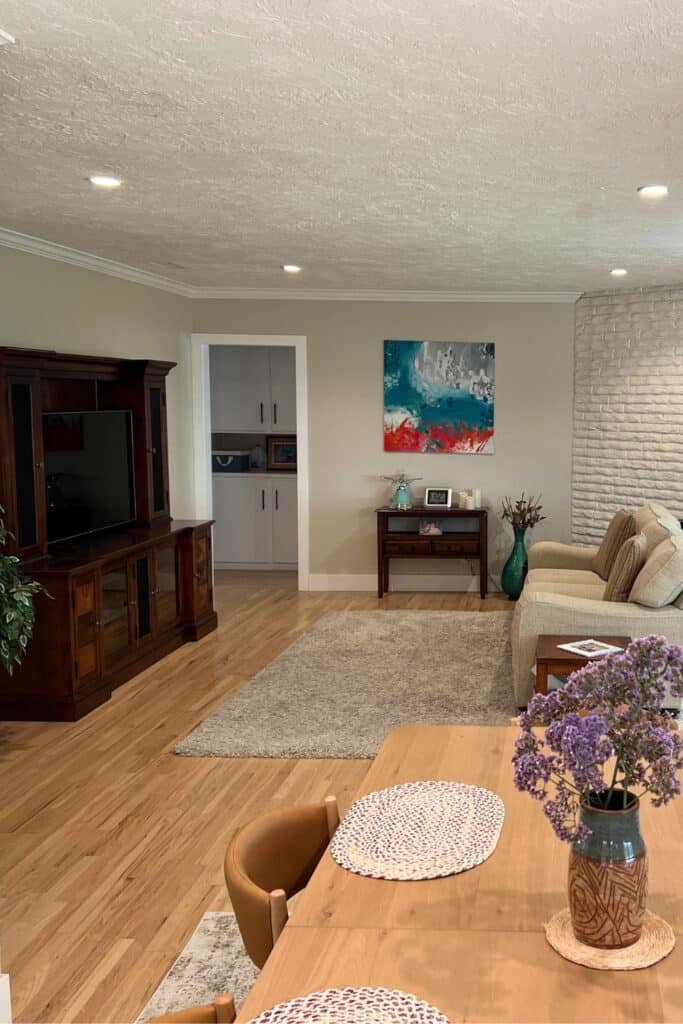
Sometimes a room can be technically organized but still feel cluttered.
This often happens when we have lots of things displayed on countertops, refrigerator doors, shelves, and walls.
There isn’t necessarily anything wrong with displaying personal items, but too many things competing for attention can make a space feel busy.
One simple experiment is to temporarily remove everything from one surface.
Clear off the refrigerator, simplify a shelf, or remove some decorations from a countertop.
Then step back and see how the space feels.
While working in my friend’s kitchen, we removed the magnets and papers from her refrigerator.
Immediately, the area looked cleaner and less visually cluttered.
But she still needed a practical place for calendars, reminders, and family information.
We discussed creating a designated spot inside a cupboard door where those things could be accessible without being on display.
I love this idea because it balances functionality with a calmer appearance.
A clutter-free home doesn’t have to be empty or boring. It just needs to work for you.
If you love displaying family photos, artwork, or collections, keep them! Just be intentional about what you choose to display.
9. Try a Temporary Layout Before Making Permanent Changes
One of the biggest mistakes we can make when updating our homes is assuming that every change needs to be permanent.
Sometimes we’re afraid to rearrange furniture or try a different storage system because we’re not sure whether we’ll like it.
But you don’t have to commit right away.
Try living with a new layout for a few weeks before deciding whether it works.
This is exactly what we decided to do with my friend’s kitchen.
We moved an existing cupboard into the kitchen to act as a pantry, knowing that she might eventually want something more permanent.
But there was no reason to spend money on custom cabinets before finding out whether the new arrangement worked for her family.
By trying a temporary solution first, she can see what she likes, what needs to change, and whether a larger project is even necessary.
This approach can save a lot of money and prevent expensive mistakes.
It also takes some of the pressure off.
Your home doesn’t have to be perfectly designed in one weekend. You can make small adjustments over time.
10. Remember That Organizing Often Gets Messier Before It Gets Better
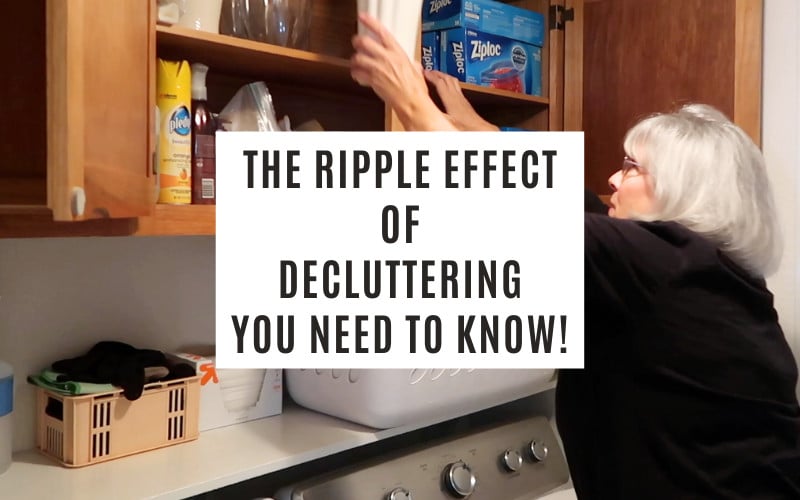
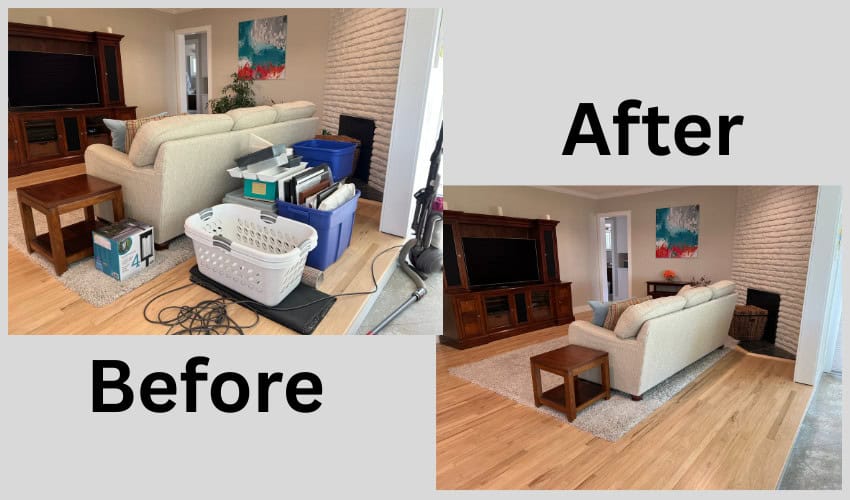
If you’ve ever started a big decluttering or organizing project, you know that things can look much worse before they look better.
Cupboards get emptied, furniture gets moved, and suddenly everything seems to be scattered around the house.
This can feel overwhelming, especially when you realize the project is taking longer than expected.
But sometimes this temporary mess is simply part of making meaningful changes.
When we were rearranging my friend’s home, we had furniture out of place, cupboards emptied, and items waiting to be sorted.
We also ran into an unexpected plumbing problem while moving the refrigerator!
What we thought would be a fairly straightforward project became much more complicated.
Thankfully, we were able to resolve the issue and continue making progress.
The important lesson is that you don’t have to finish everything in one day to be successful.
If you’re working on a large organizing project, break it into manageable steps.
Focus on one area at a time, create a plan for where things will go, and give yourself permission to stop and continue another day.
Progress is still progress, even when your home looks a little chaotic in the middle of the process.
11. Focus on Function Instead of Perfection
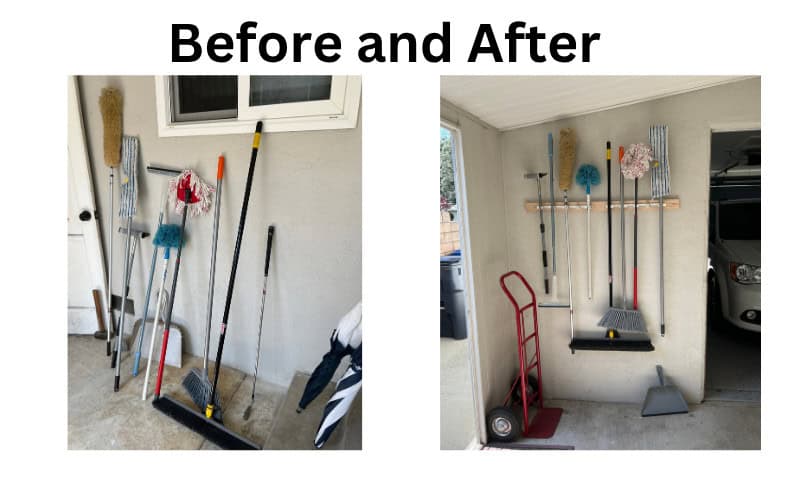
It’s easy to get caught up in wanting our homes to look a certain way.
We see beautiful kitchens, perfectly organized pantries, and gorgeous living rooms online, and suddenly our own homes feel inadequate.
But a beautiful home isn’t necessarily a functional home.
You could have the most expensive cabinets and storage containers, but if you can’t easily find what you need or move comfortably through your space, the design isn’t really working.
I’ve been trying to focus more on how a home feels to live in rather than whether every detail looks perfect.
Does the kitchen make preparing meals easier? Is the living room comfortable for your family? Can everyone find and put away their belongings?
These are the things that matter.
You might discover that a secondhand piece of furniture works better than an expensive new one.
Or that removing a few unnecessary items makes a bigger difference than redecorating an entire room.
Sometimes the simplest solutions are the most effective.
12. Let Your Home Change as Your Life Changes
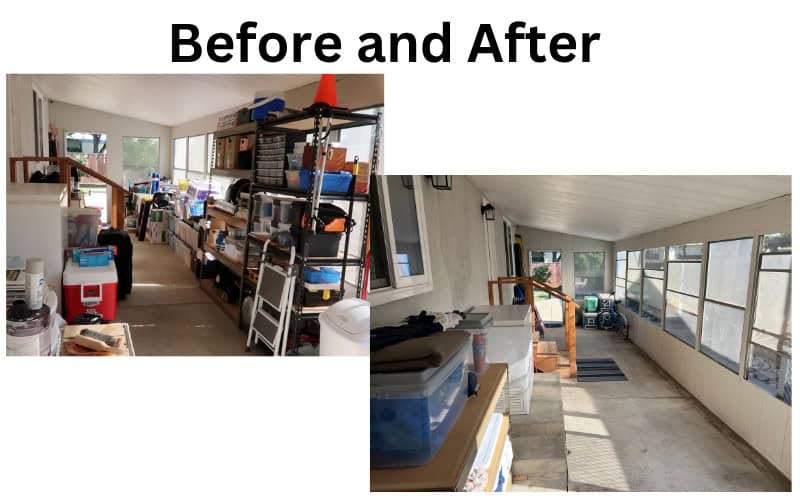
Our homes need to evolve with us.
The way you used your home ten years ago might not make sense for your life today.
Maybe your children are getting older, you’ve started working from home, or you’ve developed new hobbies and interests.
Perhaps you’re entering retirement, becoming an empty nester, or simply realizing that you want a less complicated home.
Whatever your situation, it’s okay to change how your rooms are used.
A formal dining room could become a home office. A spare bedroom might become a hobby room. A large living room could be rearranged to create multiple functional spaces.
You don’t have to follow traditional rules about what each room should be.
Instead, ask yourself:
What would make this home work better for the life I’m living right now?
I think this question can completely change the way we approach organizing and decorating.
Rather than trying to fit our lives into the way our homes have always been arranged, we can make our homes fit our lives.
Final Thoughts: You Don’t Need a Perfect Home, Just One That Works for You
One of the biggest things I’ve learned from decluttering and reorganizing homes is that we often have more possibilities than we realize.
Before spending money on new furniture, storage containers, or renovations, try looking at what you already own with fresh eyes.
Declutter the things you’re no longer using. Rearrange furniture. Repurpose storage pieces. Experiment with different layouts.
And most importantly, don’t be afraid to change something just because it’s always been that way.
Sometimes the biggest improvements come from surprisingly simple changes.
Helping my friend rethink her kitchen reminded me that creating a functional home isn’t necessarily about having more space or more money.
It’s about making better use of the space you already have.
And that’s something almost all of us can do, one small project at a time.