
Reverse Decluttering (It Really Works!)
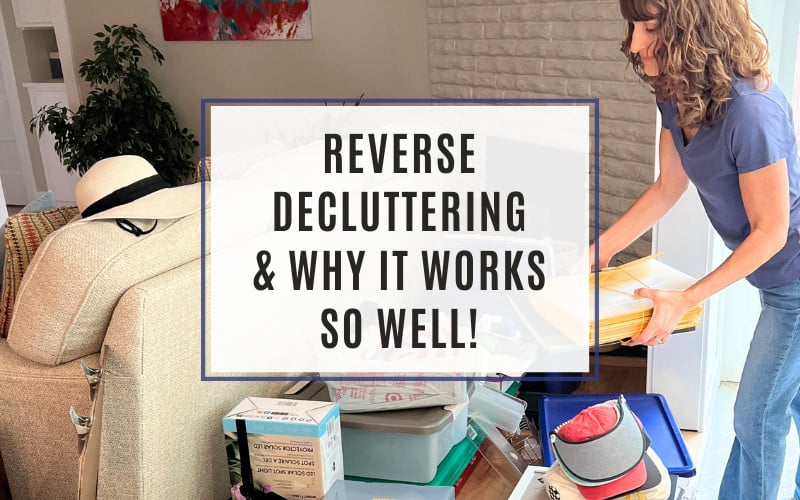
Reverse Decluttering: The Surprisingly Easy Way To Finally Let Go of Clutter
Decluttering can feel overwhelming, especially when every item in your home seems tied to a memory, a future “just in case,” or the guilt of money spent. Traditional decluttering often asks one difficult question over and over again:
“Should I get rid of this?”
However, reverse decluttering flips that entire process around. Instead of focusing on what you want to remove, you focus on what you truly want to keep.
For many people, this simple mindset shift makes decluttering feel lighter, faster, and far less emotional. Rather than staring at piles of clutter, trying to justify letting things go, you intentionally choose the items that actually support your life right now.
And surprisingly, that one change can make all the difference.
What Is Reverse Decluttering?
Reverse decluttering is a decluttering method in which you start by identifying the items you use, love, or need, rather than immediately sorting through what to throw away.
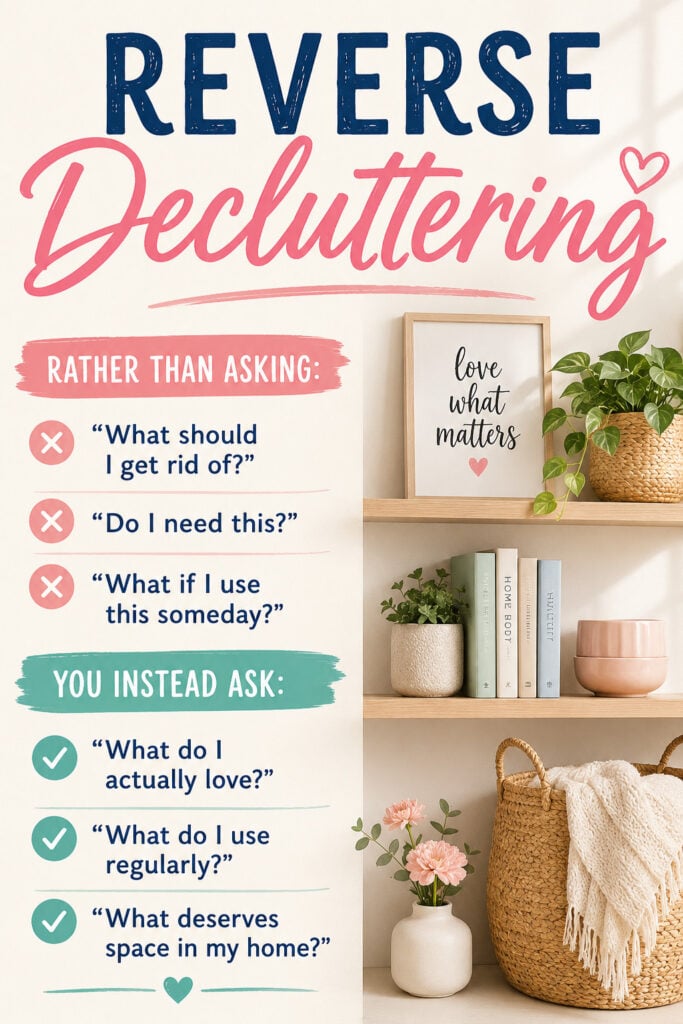
Rather than asking:
- “What should I get rid of?”
- “Do I need this?”
- “What if I use this someday?”
You instead ask:
- “What do I actually love?”
- “What do I use regularly?”
- “What deserves space in my home?”
Everything else becomes easier to evaluate afterward.
In many ways, reverse decluttering helps remove the pressure and guilt that can come with traditional decluttering methods. Instead of focusing on loss, you focus on creating a home filled with things you use and love.
This approach works especially well for people who:
- Feel emotionally attached to belongings
- Get overwhelmed by clutter
- Struggle with decision fatigue
- Have become “clutter blind”
- Want faster, more motivating results
READ: THE COMPLETE GUIDE TO DECLUTTERING WHEN YOU’RE OLDER

Why Reverse Decluttering Works So Well
One reason reverse decluttering feels easier is that your brain naturally responds better to positive decisions than negative ones.
Choosing what you love feels empowering.
Choosing what to get rid of can feel stressful.
That small mental shift often helps people finally make progress after feeling stuck for years.
Positive Mindset
Traditional decluttering can sometimes feel like deprivation. It focuses heavily on what you are removing from your life.
Reverse decluttering focuses on what you gain instead:
- More space
- Better organization
- Easier cleaning
- Less visual clutter
- More peaceful rooms
- A home that functions better
Instead of feeling like you are “losing” things, you begin creating space for the life you actually want.
That positive mindset can make decluttering feel far less emotional and much more motivating.
READ: THE COMPLETE GUIDE TO DECLUTTERING SENTIMENTAL ITEMS
Easier Decision-Making
One of the hardest parts of decluttering is making hundreds of tiny decisions.
Should you keep it?
Could you use it someday?
What if you regret getting rid of it?
Reverse decluttering simplifies the process because it is often much easier to identify the things you truly love than to justify every random item sitting in your home.
Most people can quickly point out:
- Their favorite clothes
- Their favorite kitchen tools
- The decor pieces they genuinely enjoy
- The books they actually read
- The items they regularly use
Once you pull those items forward, the remaining clutter becomes much more obvious.

It Helps Overcome “Clutter Blindness”
Have you ever stopped noticing the clutter in a room simply because it has been there so long?
That is clutter blindness.
When items sit untouched for months or years, they slowly fade into the background. You stop questioning why they are there at all.
Reverse decluttering interrupts that pattern.
Because you are actively selecting what deserves space in your home, you are forced to re-evaluate everything else around it.
Suddenly, the random piles, duplicate items, unused decor, and forgotten belongings become much easier to see clearly.
Many people are shocked by how much unnecessary stuff becomes obvious once they intentionally identify what they truly value.
Quick Results Can Build Momentum
Another reason people love reverse decluttering is that it often creates faster results.
Instead of slowly debating every item one by one, you quickly gather the things you genuinely use and enjoy.
That creates visible progress almost immediately.
Many people report finishing small spaces in under two hours because the process feels more natural and less mentally exhausting.
And quick wins matter.
When you see progress quickly, you feel motivated to keep going.
That momentum can help you finally tackle areas that have felt overwhelming for years.

How To Start Reverse Decluttering
The good news is that reverse decluttering is incredibly simple to try.
You do not need special bins, labels, or complicated systems.
You simply start by choosing what stays.
Step 1: Pick One Small Area
Start with a manageable space instead of an entire room.
Good places to begin include:
- One kitchen drawer
- A bathroom cabinet
- One shelf
- Your nightstand
- A small section of your closet
Starting small helps you build confidence and avoid overwhelm.

Take out only what you want to keep.
By pulling out the items you know you love and use, this simplifies what is left.
Now you know everything left in the closet or drawer needs a decision.
Step 3: Choose Your Favorites First
Now comes the reverse decluttering part.
Instead of sorting through what to remove, begin selecting the items you truly want to keep.
Ask yourself:
- Do I use this regularly?
- Do I genuinely love this?
- Would I buy this again today?
- Does this support my current lifestyle?
Place those items aside.
You may notice something interesting during this step: you probably need far less than you thought.
Step 4: Evaluate What Is Left
Once your favorite, most-used items are out of the way, look at what remains.
At this point, the leftover items often become much easier to declutter because they no longer feel equally important.
You may realize:
- You forgot you even owned some items
- Certain things are duplicates
- Some items no longer fit your life
- You were only keeping things out of guilt
This is where reverse decluttering becomes incredibly powerful.
Step 5: Donate, Toss, or Relocate
Finally, decide where the leftover items belong.
You can:
- Donate usable items
- Toss broken or expired things
- Relocate items that belong elsewhere
- Store only what truly has purpose
The goal is not perfection.
The goal is to create a home that feels lighter, calmer, and easier to manage.
Step 6: Put Back What You Kept
Declutter everything left in the space, and put away everything you took out to keep.

Best Areas To Use Reverse Decluttering
This method works especially well in areas where clutter tends to quietly build over time.
Some of the best spaces include:
Clothing
Instead of deciding what clothes to get rid of, start by choosing your favorite outfits and pieces you actually wear.
You will probably notice that you repeatedly reach for the same small group of items anyway.
Kitchen Items
Most people use surprisingly few kitchen tools daily.
When you pull out your true favorites first, duplicate gadgets and rarely used items become much easier to identify.
Home Decor
Reverse decluttering can completely change the way a room feels.
Choose the decor pieces that genuinely make you happy, rather than displaying everything at once.
Often, less decor creates a calmer and more intentional space.
Sentimental Items
This method can also help with sentimental clutter.
Instead of feeling pressured to get rid of memories, focus on identifying the most meaningful items first.
That often makes it easier to let go of less important keepsakes without guilt.
Reverse Decluttering Creates a Different Kind of Home
One of the biggest surprises people experience with reverse decluttering is realizing how little they actually need to feel comfortable and happy.
When your home only contains things you truly use, love, or value:
- Cleaning becomes easier
- Rooms feel calmer
- Storage works better
- You waste less time managing stuff
- Your home feels more peaceful
And perhaps most importantly, reverse decluttering helps shift your focus away from guilt and toward intentional living.
Instead of constantly asking yourself what you should remove, you begin asking a much more helpful question:
“What do I truly want to make room for in my life?”
That is often where real decluttering progress begins.


Hello
I’m help people declutter their homes often to downsize to a smaller home. This is a valuable way of looking at it. I love your article and the system you apply.
Thank you
Joyce
Brilliant!! Thanks!! 😁
I always have difficulty decluttering for the reasons you stated. Starting by picking what is most important to keep might prove easier to start.
Thanks for sharing.
I took an online course on reverse decluttering. The single best thing I learned was to ask myself this question: If I didn’t have this item, would I bring it into my house now? That simple question has helped me get rid of SO MUCH stuff, particularly clothes, gifts, and sentimental items-things I have always struggled with releasing.