7 Decluttering Lessons I’ve Learned After Years Of Letting Go
I’ve been decluttering for years now, and one thing I’ve learned is that there really isn’t one perfect way to do it.
When I first started decluttering, I was much more focused on minimalism. I loved clear counters, empty spaces, and the idea of owning less. Over the years, my life has changed. We have three kids now, more hobbies, more home projects, a garden, and yes, more stuff.
But I don’t necessarily think that’s a bad thing.
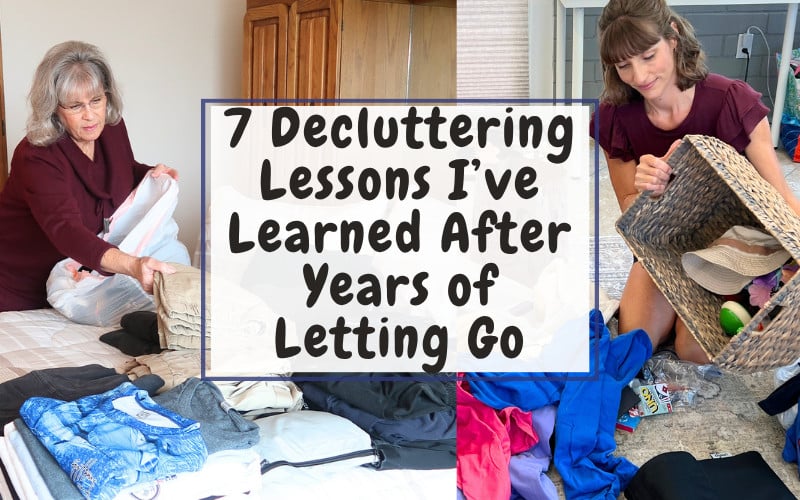
My mom has been on her own decluttering journey too, especially through the process of downsizing and moving. Recently, we sat down together and talked about what we’ve learned from years of decluttering.
And I realized that a lot of our thoughts about clutter have changed.
7 Decluttering Lessons I’ve Learned After Years of Letting Go
Here are some of the biggest lessons we’ve learned.
1. Start With the Clutter That’s Bothering You Right Now
One of the most common questions I get is: Where should I start decluttering?
I always suggest starting with the easiest and most obvious problem in your home.
If your dining room table is completely covered with stuff, start there.
If there’s a pile sitting on the floor that you walk around every day, deal with that.
If your home is already fairly organized but you know your kitchen drawers are overflowing, choose one drawer.
I don’t think you need to start by digging through boxes in the attic or pulling everything out of your garage. In fact, that can be so overwhelming that you give up before you really get started.
Start with the clutter that affects your everyday life.
When I first started decluttering, one of the first things I tackled was our cups and mugs. Every time I opened the cupboard, it was obvious that we had way too many.
It wasn’t sentimental. It wasn’t difficult. It was simply an easy place to begin.
And sometimes you need those easy decisions to build your decluttering confidence.

2. You Don’t Have to Declutter Everything at Once
I’ve never been a big believer in pulling an entire room apart just to declutter it.
For some people, that works great. For others, looking at a room full of everything they own spread across the floor is enough to make them want to walk away.
My mom and I both tend to get overwhelmed when there is too much to deal with at once.
So instead, try one drawer.
One cupboard.
One bin.
One shelf.
Finish that area, put everything away, and then decide whether you have the energy to do another one.
You don’t need to declutter your entire house this weekend to make progress. Tackling a few small areas consistently can eventually make a huge difference.

3. It’s Okay to Take Your Time With Difficult Items
Not every decluttering decision has to be made immediately.
I have a tank top right now that I know I should probably get rid of. It’s worn out, the armholes are stretched, and it doesn’t look as good as it used to.
But I loved that shirt.
What I really want isn’t necessarily to keep the worn-out shirt; I want the shirt to somehow be new again.
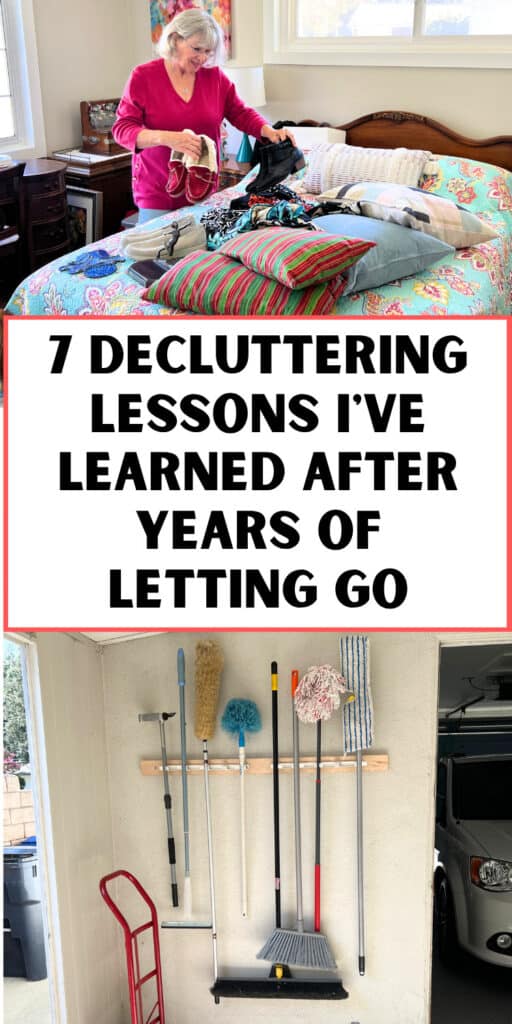
My mom does the same thing. Sometimes she’ll put a piece of clothing aside and see whether she actually reaches for it. She might tell herself she’ll wear it for gardening or camping, only to realize she doesn’t even want to wear it for those things.
Sometimes that process takes a while.
And I think that’s okay.
If you’re unsure about something, set it aside. Pay attention to whether you use it. The next time you put on that shirt and immediately want to take it back off, you may finally have your answer.
Decluttering doesn’t have to happen according to someone else’s timeline.
Watch the Full Video:

4. Getting Rid of Something Doesn’t Mean You’ll Never Think About It Again
One fear people have about decluttering is regret.
What if I get rid of something and wish I had kept it?
The truth is, that can happen.
My mom got rid of two burgundy chairs before moving. Later, both of us had moments when we thought those chairs might have worked somewhere else.
But when we really thought about it, would they have actually worked? Would we have liked the color? Would we have paid to reupholster them?
Probably not.
I’ve had similar experiences. I’ll see an old photograph and notice something I used to own and think, Oh, I loved that!
That doesn’t necessarily mean getting rid of it was a mistake.
Sometimes an object reminds us of a particular season of our life, and what we’re really missing is the memory attached to it.
There will always be a few things you could have used later. But keeping hundreds of things you don’t currently need because you might need one of them someday isn’t necessarily the answer.
Make the best decision you can for the life you’re living right now.

5. Stop Keeping Things Because You Feel Guilty
Guilt is one of the biggest reasons we hold onto clutter.
Maybe someone gave it to you.
Maybe you spent a lot of money on it.
Maybe it’s still perfectly good.
Maybe your kids used to love it.
But if you’re no longer using something, keeping it in your house doesn’t recover the money you spent on it or make the gift more meaningful.
Instead, you’re storing it, moving it, organizing it and looking at it over and over again.
At some point, the item can actually start taking away from your enjoyment of your home.
This comes up a lot with children’s toys. My mom keeps toys at her house for the grandkids, but she pays attention to what they actually play with now. As they’ve gotten older, stuffed animals, coloring books and other toys have slowly gone while the things they still love have stayed.
Kids move through stages quickly. More toys don’t necessarily mean more fun.
The same applies to almost everything else in our homes.
If something is useful but no longer useful to you, donating it gives someone else the opportunity to actually use it.
6. You Can’t Force Someone Else to Declutter
Another question I’ve gotten for years is some version of:
How do I get my husband to declutter?
Unfortunately, you can’t make another person want to get rid of their belongings.
What you can do is start with your own stuff.
My mom found that when she decluttered her side of the closet and started talking about how much easier it was to find things and how much extra space she had, my dad began to see the benefit.
That’s very different from saying, “Look at all this stuff you have. You need to get rid of it.”
I also find that making the project incredibly small helps.
Instead of telling my husband that he needs to declutter his clothes, I might say, “Do you want me to help you go through your shirts for five minutes?”
Then I’ll hold things up and let him decide.
It’s quick, it’s positive, and I’m helping rather than criticizing.
The goal isn’t to convince someone that they have too much stuff. It’s to show them how having a little less might make their life easier.

7. Your Version of a Clutter-Free Home Can Change
This might be the biggest lesson I’ve learned.
There was a point in my life when we owned less than we do today.
But our life was different.
We had fewer kids. We didn’t have the same hobbies. We didn’t have a backyard with gardening supplies. I also wasn’t as interested in decorating our home as I am now.
Today, I enjoy decorating. It’s a creative outlet for me.
Does that mean I’ve failed at minimalism because I own more decor?
I don’t think so.
My definition of clutter has changed.
To me, clutter is when I open a drawer and can’t find what I need because it’s stuffed with things. It’s when an area isn’t functioning properly. It’s when we’re keeping things that we don’t use, and they’re getting in the way of the things we do use.
If I have decorations that I enjoy, gardening supplies that we actually use, or toys my kids regularly play with, I don’t consider those things clutter just because we own them.
The goal isn’t to own the fewest possible things.
The goal is to have a home that functions well for your current life.
How I Keep Clutter From Creeping Back In
Even after years of decluttering, I still have to pay attention to what’s coming into our home.
One of the easiest guidelines I use is one in, one out.
If a shirt wears out and I replace it, the old shirt leaves.
When new toys come in, we look for toys the kids have outgrown.
With home decor, sometimes I’ll put things away for a while. If I pull them out later and realize they’re no longer my style, I feel much more comfortable donating them.
I also go through our home regularly rather than waiting for it to become completely overwhelmed again.
My mom does something similar with her clothes. At the end of a season, she’ll look at what has become worn out or what she simply isn’t wearing anymore and let those things go.
Staying clutter-free isn’t something you finish once.
It’s more like regular maintenance.
Declutter for the Life You’re Living Now
After all these years, I think this is what decluttering really comes down to.
Does this item make sense for the life I’m living right now?
If you have room for something, you enjoy it, and it isn’t causing a problem, maybe you keep it.
If you don’t use it, don’t enjoy looking at it, don’t have room for it, or find yourself constantly moving it out of the way, maybe it’s time to let it go.
Your life will change.
Your home will change.
Your hobbies, family, style and priorities will change too.
You may occasionally look back and think, I could have kept that.
That’s okay.
We can’t organize our homes around every possible version of our future lives. We can only make them work well for the life we’re living today.
And I think that’s a much healthier goal than trying to own as little as possible.