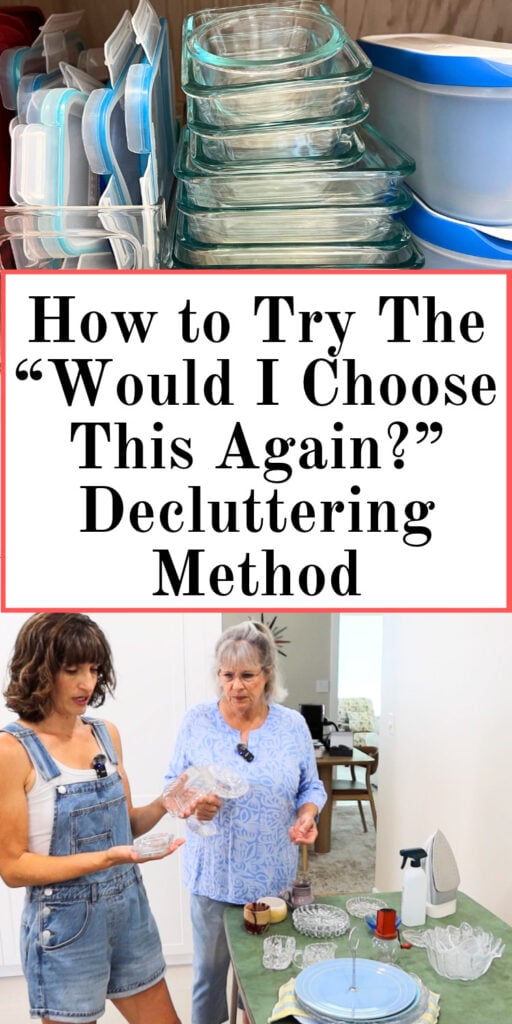
The “Would I Choose This Again?” Decluttering Method
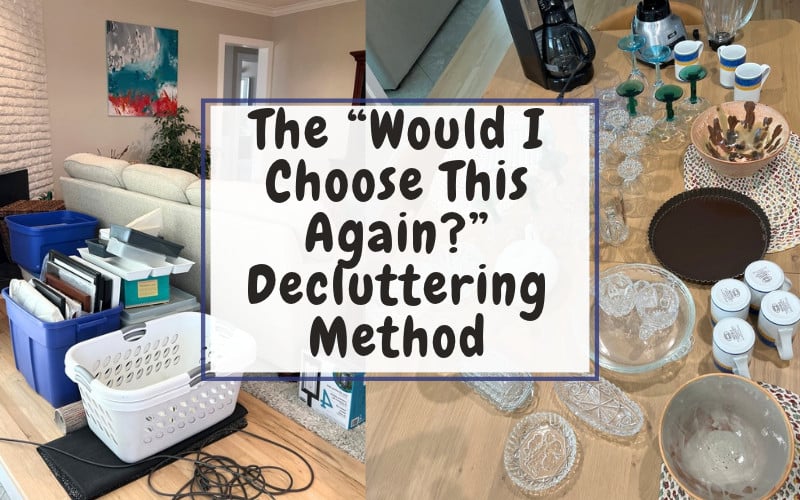
The “Would I Choose This Again?” Decluttering Method
What if one simple question could make decluttering your home easier?
Instead of picking up an item and asking:
“Should I get rid of this?”
Try asking:
“If I didn’t already own this, would I choose it again today?”
It’s a small change, but it can completely shift the way you look at your stuff.
When we already own something, there are all kinds of reasons we feel like we should keep it.
We remember how much we paid for it. We think about who gave it to us. We remember what we planned to do with it. We tell ourselves it might be useful someday.
But imagine for a moment that the item wasn’t already yours.
Would you choose that shirt?
Would you buy that kitchen gadget?
Would you bring home that piece of decor?
Would you make room on your bookshelf for that book?
Would you spend money on that piece of furniture?
If the answer is no, that doesn’t automatically mean you need to get rid of it.
But it does tell you something.
I call this the “Would I Choose This Again?” Decluttering Method, and it’s one of the simplest ways to look at the things you already own with fresh eyes.

Why Is It So Hard to Decide What to Declutter?
I think one of the hardest parts of decluttering is that we’re not making decisions about random objects.
We’re making decisions about our stuff.
And once something belongs to us, it can be surprisingly difficult to look at it objectively.
Maybe you spent a lot of money on it.
Maybe you’ve had it for 20 years.
Maybe someone gave it to you.
Maybe you bought it for a hobby you thought you’d love.
Or maybe there’s absolutely nothing wrong with it.
That’s where decluttering gets complicated.
We start looking for a reason that something deserves to leave, when sometimes the better question is whether there’s a good reason for it to stay.
What Is the “Would I Choose This Again?” Decluttering Method?
The method is very simple.
Choose an item you already own and imagine you don’t own it.
Now imagine you’re standing in a store and it’s sitting in front of you.
Ask yourself:
Would I choose this again today?
Not five years ago.
Not when you were in a different stage of life.
Not if it were 75 percent off.
Today.
Would you spend your money on it?
Would you bring it home?
Would you give it space in your closet, cabinet, garage, or living room?
If the answer is an immediate yes, that’s probably something you genuinely value.
If your answer is no, or even probably not, it’s worth asking yourself why you’re continuing to keep it.
Why This Question Works
Normally, when we’re decluttering, we ask questions like:
Could I use this someday?
Is this still good?
Did this cost a lot of money?
Could someone in my family want it eventually?
And it’s incredibly easy to find a reason to keep almost anything.
Of course you could use it someday.
But would you choose it again?
That is a much higher standard.
It shifts the focus away from finding reasons to get rid of something and toward identifying the things you genuinely want in your life.
Try It With Your Clothes
Your closet might be one of the easiest places to start.
Take out a shirt you rarely wear.
Imagine you’re shopping and you see that exact shirt hanging on the rack.
Would you buy it?
Would you like the fit?
Would you choose the color?
Would you be excited to wear it?
Or would you walk right past it?
I’ve had clothes in my closet that I kept for years simply because there was technically nothing wrong with them.
But if I saw those same clothes in a store today, there’s no way I would buy them.
That’s a pretty good indication that I probably don’t need to keep them.
Your Style May Have Changed
This question is especially useful with clothes because our style changes.
Something you loved 10 years ago might not fit your current lifestyle at all.
Maybe you used to dress differently for work.
Maybe your daily routine has changed.
Maybe your taste simply changed.
You don’t have to dislike something to let it go.
Sometimes you’ve just moved on.

Try It With Home Decor
Decor is another category where this method works really well.
Look around a room and imagine every decorative item disappeared overnight.
Which ones would you actually go out and buy again?
Would you choose that vase?
That picture?
That decorative bowl?
That lamp?
That piece of artwork?
Sometimes decor stays in our homes simply because it’s always been there.
We stop seeing it.
Asking whether you would choose it again can help you notice things you’ve been living with but don’t actually love anymore.
Try It With Kitchen Gadgets
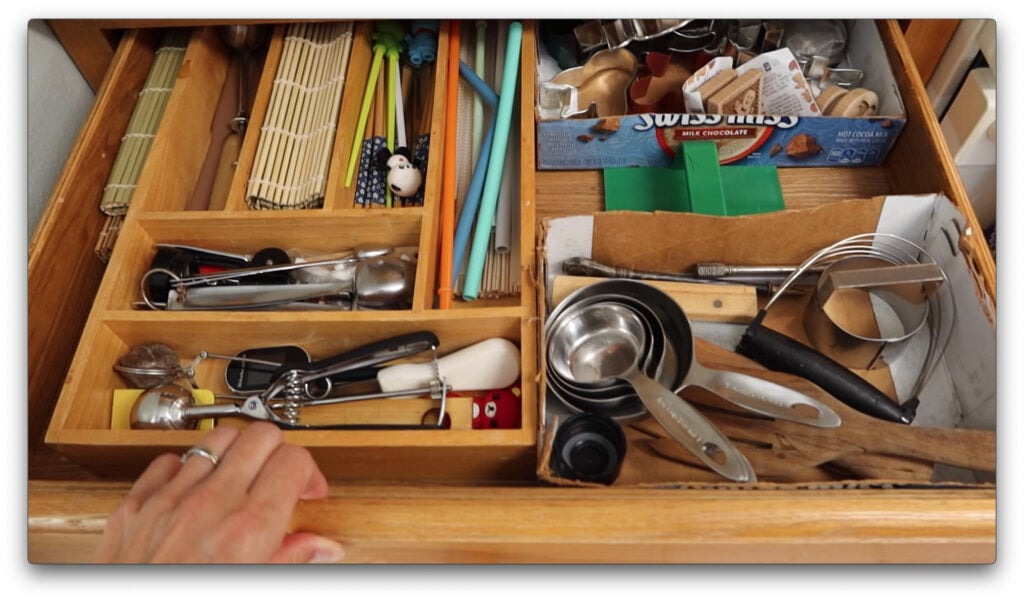
Kitchen cabinets and drawers are full of things that seemed like a good idea when we bought them.
Specialty slicers.
Extra serving dishes.
Small appliances.
Duplicate utensils.
Gadgets designed to do one very specific thing.
Pick up one of those items and ask:
If I saw this in a store today, knowing what I know now, would I buy it?
Maybe you thought you’d use it every week but you’ve used it twice.
Maybe it’s difficult to clean.
Maybe another kitchen tool does the same job.
Maybe it works perfectly well—you just don’t need it.
Knowing what you know now is the important part.
You’re making the decision with experience you didn’t have when you originally bought it.
Try It With Books
Books can be difficult to declutter because we often think of them differently from other possessions.
But you can use the same question.
If you were standing in a bookstore today, would you buy this book?
Would you read it again?
Would you recommend it?
Would you still be interested enough to bring it home?
Keep the books you love, reference, reread, or genuinely want to read.
But you don’t have to keep every book you’ve ever purchased simply because it’s a book.

Try It With Hobby Supplies
This can be a big one.
Sometimes we aren’t holding onto supplies for hobbies we actually enjoy.
We’re holding onto supplies for hobbies we wanted to enjoy.
Maybe you bought everything for painting, knitting, scrapbooking, gardening, woodworking, sewing, or another hobby.
Then life changed.
Or you tried it and realized it wasn’t for you.
If you were starting from scratch today, would you buy all of those supplies again?
If not, maybe it’s okay to admit that the hobby no longer fits your life.
Getting rid of the supplies doesn’t mean you failed.
It simply means you’re making room for the things you’re actually interested in now.
Try It With Furniture
Furniture is easy to overlook because it becomes part of the room.
But imagine your room completely empty.
Would you buy the same furniture again?
Would you choose that chair?
Would you buy that side table?
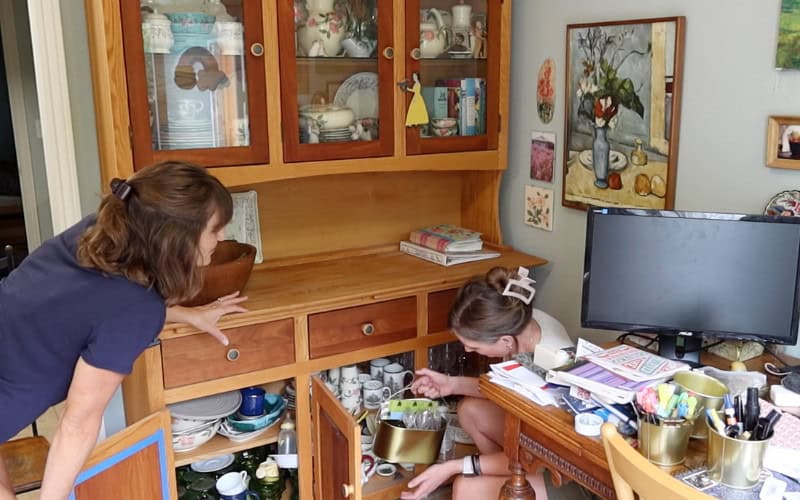
Would you put that cabinet in the same spot?
Would you choose that large piece of furniture that’s mostly being used to store other things?
Obviously, replacing furniture can be expensive, so I’m not suggesting getting rid of perfectly functional furniture just because it isn’t your dream piece.
But the question can help you identify furniture you don’t need at all.
Sometimes removing one unnecessary piece can completely change the way a room feels.

Try It With Things You’re Keeping “Just in Case”
Now imagine you’re shopping and you see an item you currently keep just in case.
Would you buy it because there’s a chance you might need it someday?
Probably not.
This doesn’t mean you should get rid of useful emergency supplies or things you have a realistic reason to keep.
But there’s a difference between being prepared and storing large amounts of stuff for unlikely scenarios.
Ask yourself whether you’d intentionally acquire the item today.
If you wouldn’t, that’s worth considering.
What About Expensive Things?
This is where the method gets harder.
Maybe you wouldn’t choose something again, but you spent a lot of money on it.
Getting rid of it can feel wasteful.
But keeping it doesn’t get your money back.
The money was spent when you bought the item.
Now the question is whether you also want to continue giving it space in your home.
If you can sell it and recover some of the cost, great.
But don’t let the original price become the only reason you’re storing something you no longer want.

What About Gifts?
Gifts come with another layer of emotion.
You may realize you would never choose an item yourself, but someone you care about gave it to you.
That can make letting go feel uncomfortable.
I try to separate the person from the object.
You can appreciate the gift and the person who gave it to you without keeping every physical item you’ve ever received.
Of course, you don’t have to get rid of every gift you wouldn’t personally buy.
This method isn’t a rule.
It’s simply information that can help you make a more intentional decision.
What About Sentimental Items?
I wouldn’t start this method with sentimental belongings.
Start with clothes, kitchen items, decor, bathroom products, or another easier category.
Sentimental items deserve a little more thought.
And the question may need to change slightly.
Instead of asking:
“Would I buy this again?”
Ask:
“Would I choose to keep this memory in this form?”
Maybe you absolutely would.
Or maybe you realize you don’t need an entire box of items to remember one period of your life.
The goal isn’t to eliminate sentimental possessions. It’s to keep the ones that actually mean something to you.

Don’t Use This as a Strict Rule
There are plenty of things I own that I probably wouldn’t walk into a store and buy today, but that doesn’t necessarily mean I should get rid of them.
Maybe the item is useful.
Maybe replacing it later would be expensive.
Maybe it serves a very specific purpose.
Maybe it has sentimental value that can’t be measured by whether you’d purchase it.
Think of this question as a decluttering tool, not a decluttering rule.
It’s meant to help you see your belongings differently.
You still get to make the final decision.
Pay Attention to Your Immediate Reaction
One thing I’ve noticed with decluttering is that sometimes we know the answer almost immediately.
You pick something up and think:
No. I definitely wouldn’t buy this again.
Then the negotiating starts.
“But it’s still good.”
“It was expensive.”
“I might need it.”
“Someone might want it someday.”
Pay attention to that first reaction.
You don’t necessarily have to follow it, but don’t ignore it either.
Your initial response may tell you more about how you actually feel about the item than the five minutes of justification that come afterward.
Try This Method in One Small Area
You don’t have to walk through your entire home asking this question about every single possession.
Start small.
Choose one:
- Kitchen drawer
- Bathroom cabinet
- Section of your closet
- Bookshelf
- Decor shelf
- Hobby bin
- Linen closet
Pick up each item and ask:
“If I didn’t already own this, would I choose it again today?”
Make a pile of the obvious no’s.
You may be surprised by how quickly it grows.
Look for the Things You Would Absolutely Choose Again
There’s another side to this method that I really like.
It doesn’t only show you what you don’t want.
It shows you what you do want.
Maybe you realize you would absolutely buy your favorite jeans again.
You’d choose the same coffee mug.
You’d buy that painting again.
You’d keep your favorite books.
You’d choose the same kitchen appliance because you use it every day.
Those items tell you something about your preferences.
The more you understand what you genuinely use and love, the easier it becomes to avoid buying things that will eventually turn into clutter.
Use What You Learn Before You Shop
This method doesn’t have to stop when you’re finished decluttering.
Take what you’ve learned with you the next time you shop.
If you’re getting rid of five shirts you wouldn’t choose again, look at why.
Maybe you don’t like that fabric.
Maybe you don’t wear that color.
Maybe you don’t like that style.
If you’re decluttering kitchen gadgets, notice which ones didn’t work for you.
If you’re getting rid of decor, pay attention to what you kept.
Decluttering can teach us a lot about what not to buy again.
And that might be even more valuable than the space we create by getting rid of things.
You Get to Choose Again
One reason I like this decluttering method is because it gives us permission to change our minds.
You made the best decision you could when you originally bought something.
Maybe you loved it.
Maybe you needed it.
Maybe you thought you’d use it.
But you aren’t required to make the same decision forever.
Your home isn’t a permanent record of every purchase you’ve ever made.
You get to choose again.
Look around your home and ask:
Would I choose this again today?
If the answer is yes, appreciate it and keep it.
If the answer is no, ask yourself why you’re still holding onto it.
You may discover that a lot of the clutter in your home isn’t made up of things you actively chose to keep.
It’s simply made up of things you never decided to let go of.
And sometimes asking one different question is all it takes to finally make that decision.