
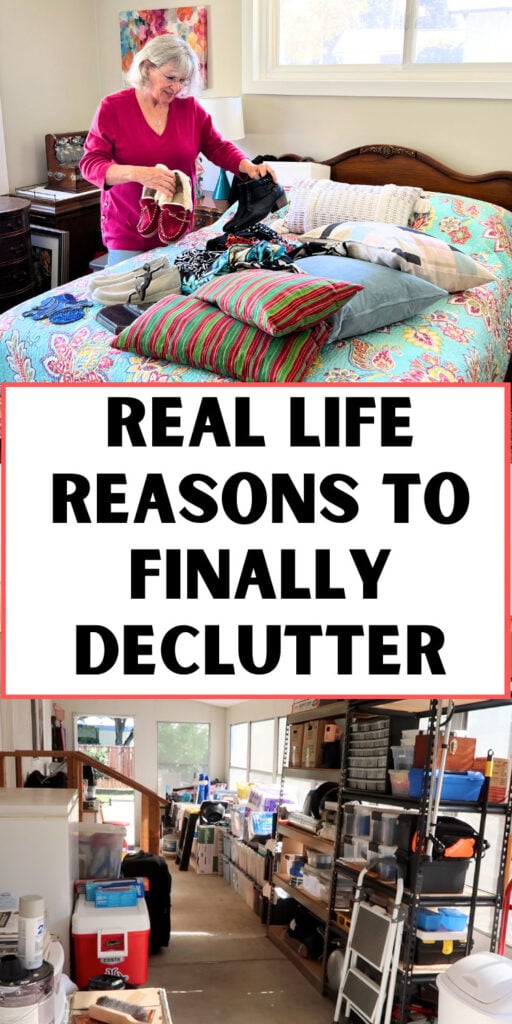
Real Life Reasons To Finally Declutter
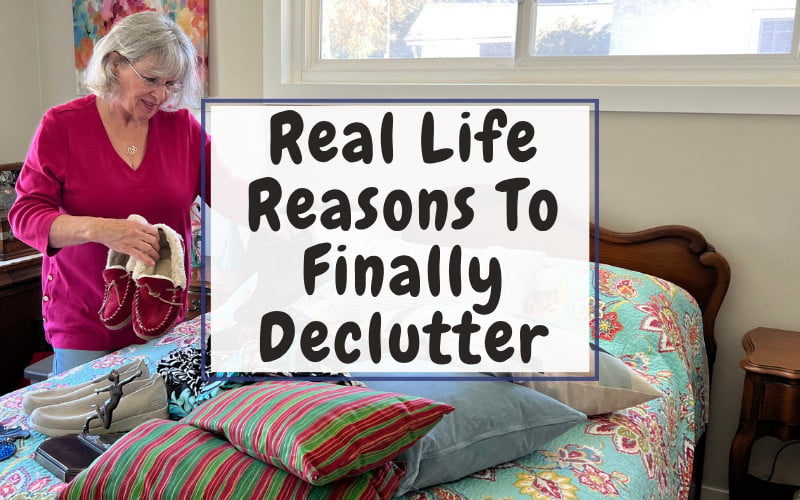
Decluttering is rarely just about getting rid of stuff. Here are the real-life reasons to finally declutter.
Usually, there is a reason we have kept something. Maybe we paid good money for it. Maybe it was a gift.
Maybe we think we could use it someday. Sometimes we’ve had something for so long that we don’t even really see it anymore.
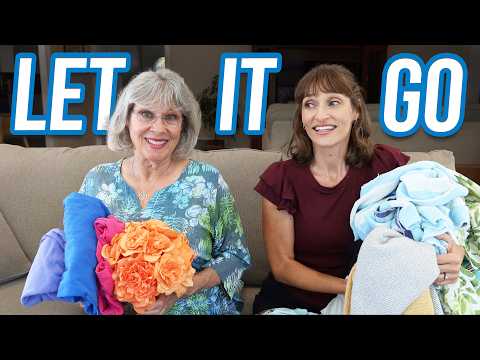
This is why my mom and I like talking about not only what we’re decluttering, but why we’re finally ready to let it go.
In our latest decluttering session, we both gathered things from around our homes that we were ready to part with. Some decisions were incredibly easy. Others involved things we had owned and used for years.
As we went through everything, I noticed that the same reasons for decluttering kept coming up again and again.
So even if you don’t have the exact items we’re getting rid of, these are some good questions to ask the next time you’re trying to decide what should stay and what can finally go.
It Doesn’t Fit Your Life Anymore
One of the biggest reasons we decluttered this time was that our lives had changed.
My mom recently moved, and as she continues organizing her new house, she’s finding things that made sense in her old home but don’t necessarily make sense now.
For instance, she had placemats that she had used for years. There wasn’t anything particularly wrong with them, but they didn’t work well for her current dining setup, and more importantly, she was simply tired of them.
She also had a laundry drying rack left behind by the previous homeowners. She tried to figure out how she could use it, but she already had another drying rack that worked better.
This is such a simple decluttering question:
Does this item work for the life and home I have right now?
Not the home you used to have. Not the lifestyle you had ten years ago. And not some imaginary future version of your life.
Your belongings should work for the way you’re actually living today.

You Don’t Have to Keep Something Just Because It’s Useful
This came up several times during our decluttering.
My mom had a large organizer designed to hold all the attachments for her vacuum. It was actually a nice, high-quality organizer.
But she realized all of the attachments she actually needed could fit into a much smaller container.
Immediately, the temptation was to think, But this is nice. Couldn’t I use it for something else?
That’s exactly how clutter gets repurposed instead of decluttered.
Sometimes we work so hard to find another purpose for an item that we end up keeping something we don’t need.
If you already have a use for something, great. But you don’t necessarily need to invent a use just because an item seems too nice to give away.
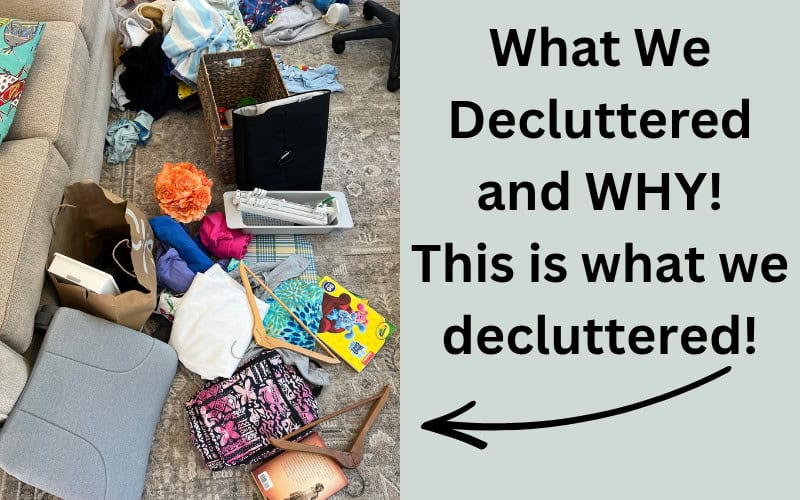
What We Decluttered and Why: Real-Life Reasons to Finally Let Things Go:
Free Stuff Can Still Become Clutter
One thing I was ready to get rid of was a poster one of my kids had received for free.
They didn’t particularly care about the movie. They didn’t want to hang the poster anywhere. But because someone had handed it to them, suddenly there was an attachment to it.
“Maybe we can keep it in the closet.”
And there it would probably sit for years.
This is one reason I’ve become much more careful about what comes into our home in the first place.
Free doesn’t mean clutter-free.
Promotional items, giveaways, party favors and other little freebies can feel harmless individually, but they add up.
Before bringing something home simply because it’s free, ask yourself:
If I saw this in a store, would I actually pay money for it?
If the answer is no, you probably don’t need to bring it home.
You Already Have Enough
I found a throw blanket that was still perfectly usable. I had bought it secondhand a couple of years ago, and there was nothing wrong with it.
The problem was that I had acquired other blankets since then that I liked much more.
I didn’t need all of them.
This is an important reminder that something doesn’t have to be broken, ugly or useless before you’re “allowed” to declutter it.
Sometimes you simply have more than you need.
If you have ten of something but regularly use your favorite three, consider whether you really need the other seven.
Keeping your favorites and letting go of the rest can make your home feel much simpler without leaving you feeling deprived.
It’s Worn Out, And That’s Okay
We had quite a few items that had simply reached the end of their useful lives.
I had a beach towel that was literally shredding around the edges. We’d used it over and over again, and I kept cutting off the strings as it continued unraveling.
Of course, my decluttering brain immediately thought:
Maybe we could use it for camping.
But we already have old towels.
Sometimes we need to give ourselves permission to say, we used this up.
The same thing happened with several pieces of clothing. Some were stretched out. Some were stained. Some had been worn for years.
Getting rid of something that you’ve thoroughly used isn’t wasteful. In many ways, that’s the best possible outcome for something you bought.
You bought it. You used it. You got your money’s worth.
Now it can go.
Stop Saving Uncomfortable Clothes
Both my mom and I found clothing that technically fit but wasn’t comfortable.
One dress in my closet was really cute, but the fabric was so heavy that every time I put it on during warmer weather, I immediately took it back off.
I kept thinking I would wear it eventually.
I even considered altering it by cutting off the sleeves and shortening it. Then I realized I was creating an entire project just so I wouldn’t have to admit that the dress didn’t work for me.
My mom had similar clothing that was too thick, stiff, hot or uncomfortable.
This is such a good category to look through in your own closet.
If you constantly put something on and then take it back off, pay attention.
Your closet doesn’t need to be filled with clothes that technically fit. It should be filled with clothes you actually want to wear.
Don’t Keep Something Because You Might Replace It
My mom had an old hanging travel toiletry bag she’d owned for around 20 years.
The inside was deteriorating, so there was no question that the bag itself needed to go.
But then we started talking about whether she should buy a replacement.
At first, it seemed obvious. If you’re getting rid of a toiletry bag, don’t you need another toiletry bag?
Not necessarily.
My mom doesn’t travel nearly as much as she used to, and she already owns other containers that can hold her toiletries. She realized she could probably use what she already has rather than automatically replacing the old one.
This is something worth thinking about whenever an item wears out.
Do I actually need to replace this?
You might discover you’ve been automatically replacing things that no longer serve your current lifestyle.
“It’s Old” Isn’t Always a Reason to Keep It
This is a particularly hard one for my mom.
She loves old things.
During this declutter, she found some old wooden hangers. One even had writing indicating it came from Norway, which immediately made it feel interesting and special.
She had researched similar hangers before and knew they might be worth a few dollars each.
But there was one big problem:
She wasn’t using them.
Sometimes age, history or the possibility that something could have value makes an ordinary object suddenly feel important.
But you don’t have to become the permanent caretaker of every interesting old object that enters your home.
You can appreciate its history and still let someone else enjoy it.
Go Through Your Kids’ Clothes Regularly
One of the easiest places for clutter to accumulate is children’s clothing.
Kids grow so quickly that it’s easy to have drawers filled with clothes that no longer fit.
I try to keep my kids’ wardrobes relatively minimal, which means they actually wear their clothes a lot. By the time they’ve outgrown many things, those clothes are stained, stretched, or worn out.
And I’m okay with that.
I’d rather have fewer clothes that are actually being worn than drawers packed with clothing we’re saving “just in case.”
Every few months, open the drawers and check:
- Does it still fit?
- Do they actually wear it?
- Is it still in good enough condition?
- Does it make sense to save it for another child?
You don’t automatically have to save everything as a hand-me-down.
Pay Attention to Things You Keep Trying to Make Work
I found a secondhand sweater/jacket that I had bought to wear over dresses.
It seemed like a great idea when I bought it.
But every single time I tried it with an outfit, I hated the way it looked.
So I would put it back in the closet and think:
Maybe it’ll work with something else.
Eventually, you have to trust the evidence.
If you’ve tried an item repeatedly and it never works, keeping it longer probably isn’t going to change anything.
This applies to clothes, kitchen gadgets, organizers, furniture and almost anything else.
Sometimes the best thing you can do is admit:
That purchase didn’t work out.
Then let it go.

Be Careful With “Just in Case”
My mom had a pair of shoes that hurt her feet.
In the past, she probably would have kept them as a backup pair.
Maybe there would eventually be some occasion when she needed black shoes and could tolerate them.
But why?
If shoes hurt your feet every time you wear them, you already have your answer.
“Just in case” is one of the biggest reasons clutter sticks around.
Instead of asking whether you could possibly use something someday, ask:
Based on my actual life, how likely am I to use this?
Those are two very different questions.
Decluttering Can Teach You What NOT to Buy
One of my favorite parts of decluttering is that it shows you your shopping mistakes.
My mom had bought a back support gadget online that sounded wonderful in the advertisement.
In reality?
It was uncomfortable, awkward, and wasn’t used.
Instead of only viewing that purchase as wasted money, we can use it as information.
For my mom, one lesson has been to be more careful about late-night online shopping and products that promise to solve a problem instantly.
Your decluttering pile can actually become a shopping lesson.
Look at the things you’re getting rid of and ask:
Why did I buy this in the first place?
Maybe you notice that you frequently declutter trendy clothes, organizing products, kitchen gadgets, sale items or things you bought after seeing an advertisement.
Once you recognize the pattern, you can stop the clutter before it enters your home.

Yes, You Can Declutter Organizers
This one always makes me laugh because we tend to think organizers are automatically helping us be organized.
But organizers can become clutter too.
I had several organizers sitting in my closet because I thought:
I’ll use those the next time I reorganize something.
Meanwhile, I had to look at and store the organizers every day.
Eventually I realized I was keeping clutter to potentially organize future clutter.
If I genuinely need an organizer someday, I can find one then.
You don’t need an entire collection of empty baskets, bins and containers waiting for their big moment. If they’re creating more visual and physical clutter than they’re solving, it’s okay to let them go.
You Don’t Need a Huge Decluttering Day
One of the biggest things my mom and I have learned is that decluttering doesn’t need to happen all at once.
We both tend to collect things as we notice them.
I keep a basket where I can put items I’ve decided we no longer need. Instead of waiting until I have an entire Saturday available to declutter the house, I can make decisions as I go.
My mom is doing something similar after her move.
She’s slowly chipping away at things.
And sometimes I think this approach is easier because you aren’t forcing yourself to make hundreds of decisions in one day.
You see something.
You realize you aren’t using it.
You put it in the decluttering basket.
Done.
Over weeks and months, those small decisions can add up to a surprisingly large amount of stuff leaving your home.
What Does “Declutter” Actually Mean?
One last thing we talked about in the video is what we mean when we say we’re “decluttering” something.
It doesn’t mean we’re throwing everything into the trash.
Decluttering simply means the item is leaving our home.
Some things are still in great condition and can be donated or given to someone who will use them.
Some things can be recycled.
And some things are stained, broken, deteriorating or completely worn out and genuinely belong in the trash.
Before donating, we try to look through everything rather than putting obvious trash into a donation bag and making the thrift store deal with it.
The goal isn’t simply to move our clutter somewhere else. It’s to responsibly decide where each item should go.
The “Why” Behind Decluttering Matters
After years of decluttering, I’ve realized that deciding what to get rid of is only part of the process.
Understanding why we’re getting rid of it might be even more helpful.
Every item teaches us something.
Maybe we don’t need as many backups.
Maybe we need to stop accepting every free item.
Maybe we should buy fewer clothes but wear them more.
Maybe we don’t need to replace something simply because the old version wore out.
Or maybe we need to stop buying organizers before we know exactly what we’re organizing.
These small realizations slowly change how we manage our homes.
You don’t have to declutter half your house this weekend.
Start with one drawer, one shelf or even one item.
Ask yourself:
Do I use this? Do I like it? Does it work for my life right now? And if I saw it today, would I choose to bring it into my home again?
If the answer keeps coming back no, maybe you’ve found your next thing to let go.
Click Here to Follow Us Over On Instagram



Thank you for all the helpful hints…even with living a more simple life with the items in our home and helping family and friends over the years it is still an ongoing process…I always feel inspired after watching your videos with your Mom and reading your newsletters/posts…thank you all around and we appreciate all the efforts 😊
Hi Angela,
I always appreciate reading your comments, and I am so happy to have you as part of our community.
Thank you for being here!
-Shannon