Decluttering An Overwhelming Space & How to Make It Feel Manageable
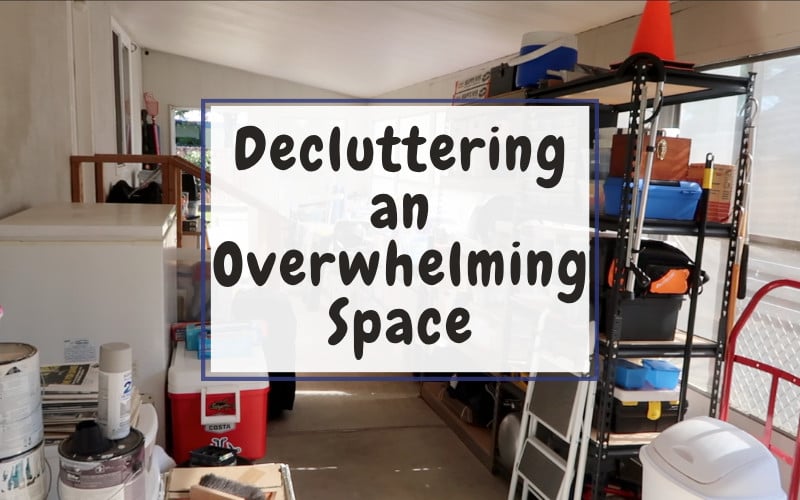
Have you ever looked at a cluttered space and felt like you didn’t even know where to begin?
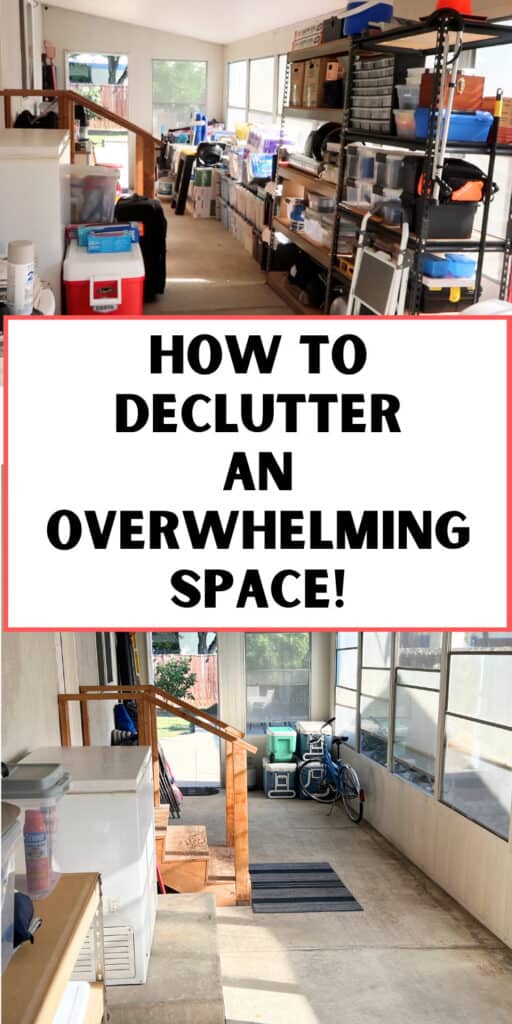
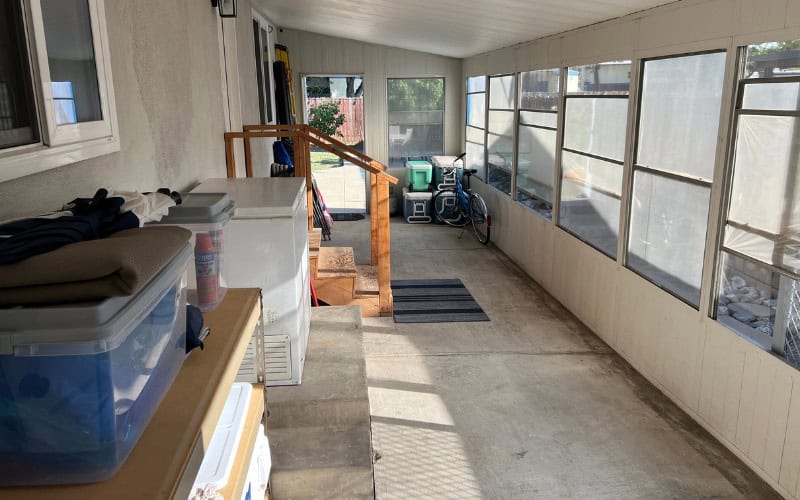
That’s exactly how my mom’s outdoor patio area started to feel. Since moving into their new home, this space had slowly become the place where all of the miscellaneous outdoor items landed.
There were brooms, mops, bins, fishing supplies, camping gear, extra rugs, project supplies, an ironing board, a golf club, outdoor furniture, and plenty of things that simply hadn’t found a permanent home yet.
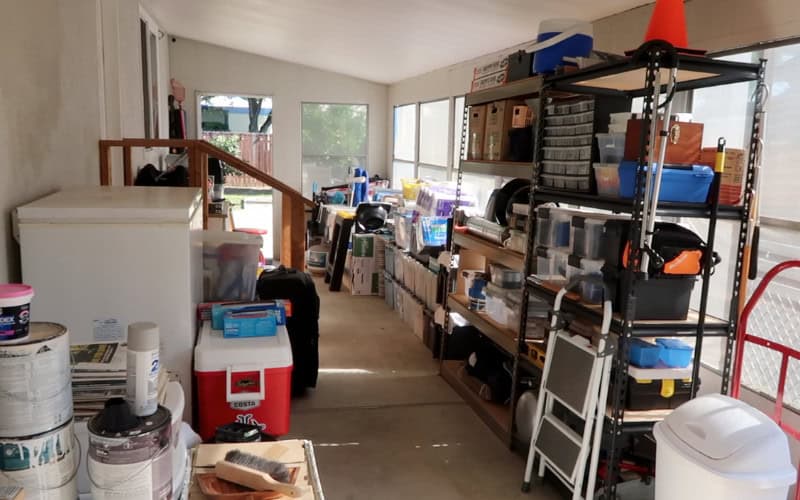
When you have a space like this, it’s tempting to think you need to tackle everything at once. But one thing I’ve learned from helping my parents declutter and downsize is that overwhelming spaces usually become manageable when you stop looking at the entire mess and start solving one small problem at a time.
Decluttering an Overwhelming Space: How to Make It Feel Manageable
Here are some of the things we did to finally get this space under control.
1. Start With One Obvious Problem
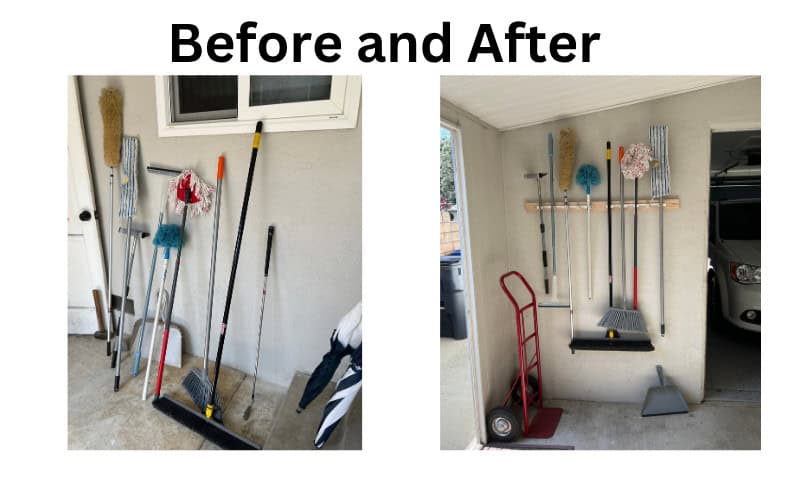
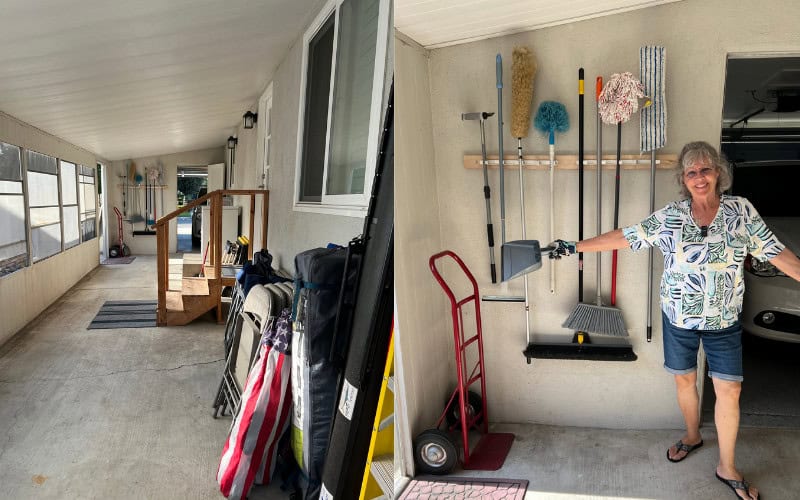
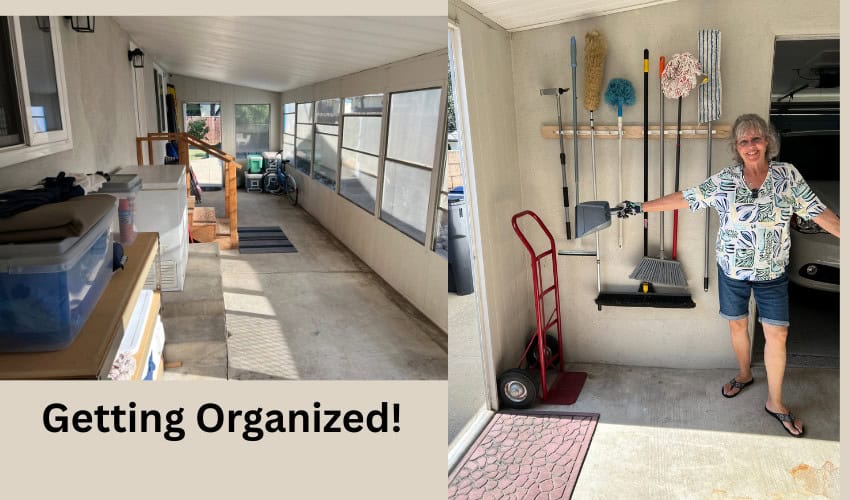
Instead of walking into the patio and trying to organize everything, we started with something very specific: the brooms, mops and other long-handled cleaning tools leaning against the wall.
They didn’t have a designated place, so my husband Grant installed a piece of wood along the wall with holders that allowed us to hang everything up.
It was a relatively small project, but immediately the space looked better.
This is a great trick when you’re overwhelmed. Don’t ask yourself, How am I going to organize this entire room?
Ask:
What is one obvious problem I can solve right now?
Maybe it’s getting everything off the floor. Maybe it’s clearing one shelf. Maybe it’s dealing with a pile of donations.
Once you solve that first problem, the next step often becomes much easier to see.
2. Get Rid of the Easy Things First
Once we started going through everything, there were several items my mom was ready to let go of.
One was an old golf club she used to carry while walking near her previous home because there were bears, coyotes and mountain lions in the area. She doesn’t need it for that purpose anymore, so it could go.
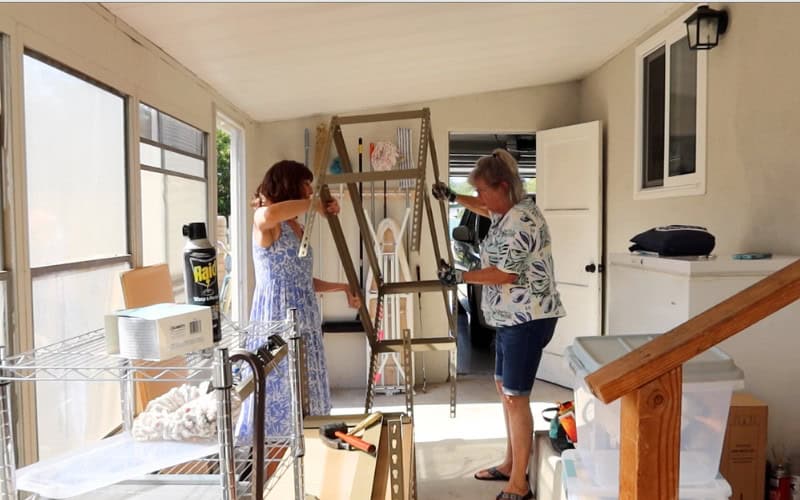
Another was her ironing board, which had been around for about 20 years and had quite a history attached to it. Even though it was still usable, she realized she rarely needed it anymore. If she ever does need an ironing board for a project, she can borrow mine.
These decisions created momentum.
When you’re facing a really overwhelming space, I wouldn’t necessarily start with the hardest sentimental item in the room.
Look for the easy decisions first.
What is broken?
What are you obviously finished using?
What belongs to a previous stage of your life?
What could you easily borrow if you only need it once every few years?
Removing a few obvious items gives you more room to work and makes the rest of the decluttering process feel less intimidating.
3. Don’t Keep Storage Just Because It’s Storage
One of the things we found was an extra storage organizer my mom had used in the closet at her old house.
This is where decluttering can get tricky.
Storage containers, shelves and organizers always feel useful. You can immediately start imagining another place where you might use them.
I do the exact same thing.
But sometimes an extra storage solution is really just another piece of clutter.
We briefly talked about whether I could use the organizer at my house, but I realized we were already at capacity. Taking home another organizer simply because I might find a use for it wouldn’t actually help me.
So we donated it.
If you have empty baskets, bins, shelves or organizers sitting around, ask yourself whether you actually have a specific use for them.
If you don’t, you don’t necessarily need to find something to put inside them.
You might just need to let the organizer go.
4. Organize for the Way You Actually Live
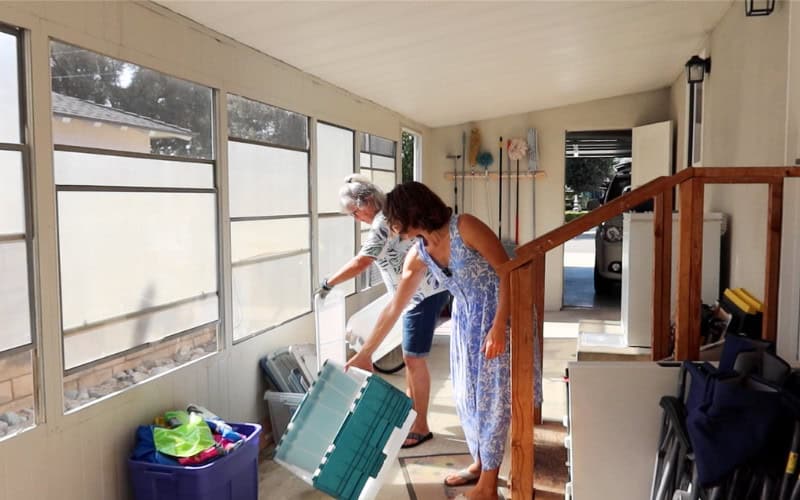
One of my mom’s main goals for the patio was to make the things she regularly uses easier to access.
She wanted outdoor sprays, cleaners and similar supplies near the back door instead of having to walk around the house, open the garage and search for them every time she needed something.
At the same time, she didn’t want those products stored in the pantry because of the smell.
So instead of organizing based on where something is “supposed” to go, we thought about where it would actually be most convenient.
This is something I think makes a huge difference when organizing.
Ask yourself:
Where would I naturally look for this?
The best organizing system isn’t necessarily the prettiest one. It’s the one you will actually maintain.
5. Use Containers to Create Limits
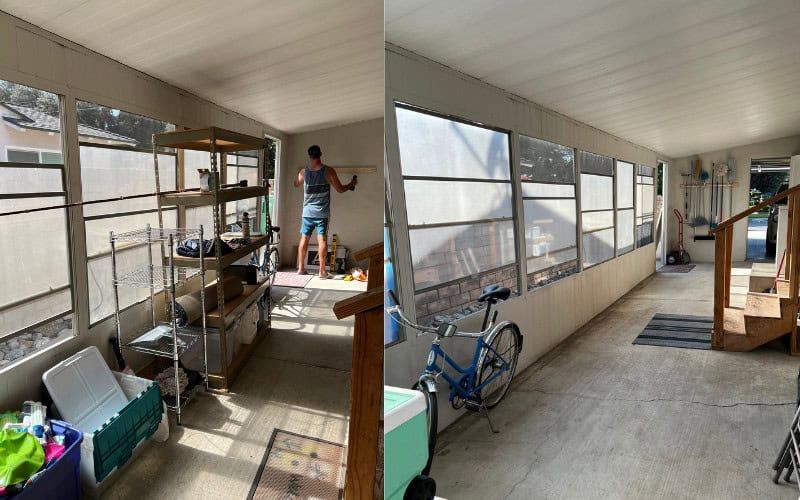
There were a lot of miscellaneous bins in this space, including some without lids.
Rather than keeping every container simply because it might be useful someday, we started matching containers with lids and consolidating what was inside them.
For example, we were able to fit a plastic swimming pool into a bin with a lid. Once everything fit, we could get rid of another bin that was missing its lid.
Containers work best when they create boundaries.
Instead of continuously adding more bins because you have more stuff, decide how much space you’re willing to dedicate to a category.
If the camping gear fits into the camping area, great.
If the pool supplies fit into one bin, that’s the limit.
When everything has a boundary, it becomes much easier to see when you have more than your space can reasonably hold.
6. Don’t Declutter Other People’s Things Without Them
There were several items in the patio that belonged to my dad.
Since he wasn’t home, we didn’t make those decisions for him.
We could move his belongings into the appropriate area, but ultimately he needed to decide whether he wanted to keep them.
This is especially important when you’re decluttering a shared home.
It’s easy to look at someone else’s belongings and think, Why in the world are we keeping this?
But the goal isn’t to get rid of as much as possible.
The goal is to create a home that works for the people living there.
You can organize someone else’s belongings or ask questions about them, but whenever possible, let that person make the final decision.
7. Keep Things You Actually Use
Decluttering doesn’t mean you have to get rid of everything.
At one point my mom questioned whether she really needed to keep her plunger.
That was one item I definitely voted to keep!
There were also several large ice chests that might look excessive to someone else, but my dad uses them when he goes deep-sea fishing.
That’s an important distinction.
Instead of asking:
Would a minimalist keep this?
Ask:
Do we use this enough to justify the space it takes up?
Your home should support your lifestyle.
Someone who camps regularly will probably own more camping equipment. Someone who gardens will have gardening supplies. Someone who fishes will have fishing equipment.
Decluttering isn’t about reaching someone else’s definition of “enough.”
It’s about deciding what is enough for you.
8. Move Things Out of the Way of Daily Life
As we worked, we moved my dad’s bike into a corner that wasn’t being used.
It was a simple change, but suddenly there was a clear walkway through the patio.
This is one of the easiest ways to make an overwhelming space feel better.
Prioritize your pathways and frequently used areas.
If you’re constantly stepping around a box, moving a basket or squeezing past a piece of furniture, that’s a clue that something needs to change.
Sometimes the item doesn’t need to leave your home.
It just needs a better location.
9. Accept That Some Decisions Can Wait
Not everything needs an immediate answer.
There were things my mom wanted to keep through the summer and reevaluate later. There were also parts of this patio that we still aren’t completely sure how they’ll eventually be used.
And that’s okay.
Sometimes decluttering becomes overwhelming because we think every item requires a permanent decision.
It doesn’t.
You can decide:
I’m keeping this until the end of summer and then I’ll reconsider it.
Or:
I’m putting this here for now and we’ll see whether this system works.
You aren’t signing a contract with your organizing system.
You can change it.
10. Take Donations Out Immediately
Once my mom decided to donate the ironing board, golf club and storage organizer, we didn’t create another donation pile in the patio.
We put everything directly into the back of the car so she could take it to the thrift store.
This is such an important final step.
Decluttering isn’t finished when you decide to get rid of something.
It’s finished when the item actually leaves your home.
If possible, load donations directly into your car or put them somewhere that makes it easy to get them out of the house quickly.
Otherwise, your donation pile can easily turn into a new clutter pile.
11. Remember That Progress Doesn’t Have to Happen All at Once
Probably the biggest lesson from this project is that we didn’t transform this space overnight.
My parents have been working through their new home little by little since moving. We worked on the garage. We dealt with other areas. My dad eventually took apart an old cabinet that wasn’t working in the patio. We slowly figured out what they actually wanted to store out there.
Then we came back and tackled another layer.
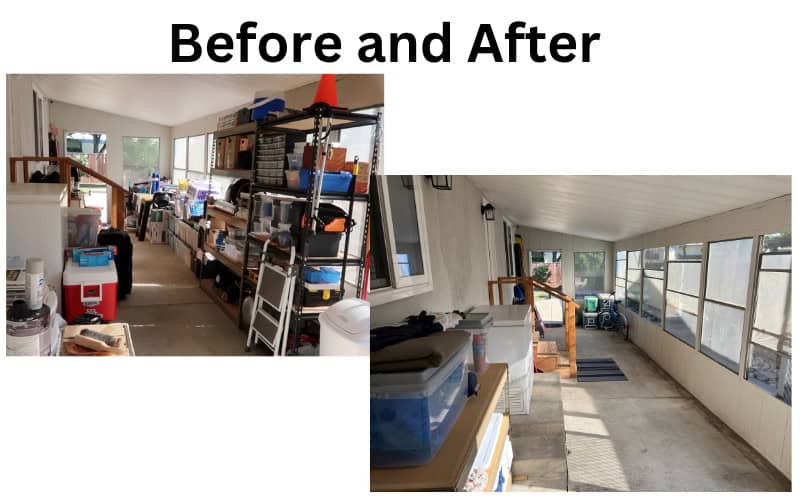
By the end of this project, we could finally see how much progress had been made.
I think this is important because we see so many dramatic decluttering before-and-afters online. It can make you feel like you’re doing something wrong if it takes you weeks, months or even years to work through your home.
Real-life decluttering takes energy.
It takes time.
Sometimes you need to live with something before realizing you don’t need it.
Sometimes you aren’t ready to make a decision today, but six months from now the answer will seem obvious.
And sometimes you just get tired and need to stop.
That’s normal.
12. Stop Comparing Your Amount of Stuff to Someone Else’s
Even after everything my parents have decluttered, there will always be someone who looks at their home and says they still have too much.
But what seems like a lot to one person might seem like very little to someone else.
My parents have downsized tremendously from their previous home. They’re continuing to work through their belongings, but they also have room for the things they use and enjoy.
That’s what matters.
The goal of decluttering isn’t to own the least amount possible.
It’s to remove the things that are getting in the way so you have space for the things that actually matter to you.
What to Do When You Feel Completely Overwhelmed by Clutter
If you’re standing in front of a garage, basement, spare room, closet or other cluttered space and have absolutely no idea where to start, keep it simple:
- Pick one small area.
- Remove obvious trash.
- Pull out the easiest donations.
- Put misplaced items where they belong.
- Group similar things together.
- Give frequently used items an easy-to-access home.
- Consolidate partially empty containers.
- Clear the floor and walking paths.
- Put donations directly into your car.
- Stop when you’ve had enough and come back another day.
You don’t have to finish the entire room for the day to count as progress.
A Little Progress Is Still Progress
By the time we finished my mom’s patio, there was finally open floor space again. The brooms and cleaning tools were hanging on the wall, supplies were grouped together, unnecessary items were headed to the thrift store, and the things my parents actually use had a place to live.
More importantly, the space finally felt manageable.
There are still things they may declutter later. There are still projects they want to do around the house. And we may eventually change how this patio is used completely.
But that’s part of the process.
If you’re dealing with an overwhelming space in your own home, don’t wait until you have enough time or energy to transform the whole thing.
Start with one shelf.
One pile.
One bin.
One decision.
Then keep chipping away.
Eventually, all of those small decisions add up to a very different space.
Read More:
Full Guide to Decluttering When You’re Over 65
10 Harsh Decluttering Truths You Need to Know