Decluttering Checklist for Seniors
Decluttering Checklist for Seniors: What to Keep and What to Let Go
Decluttering doesn’t have to be overwhelming—especially if you take it one room at a time. Whether you’re downsizing, simplifying, or just want a lighter home, having a clear checklist makes it much easier to decide what stays and what goes.
This guide walks you room by room—kitchen, closet, paperwork, and garage—so you can focus on the areas that make the biggest difference. Use it as a reference, print it out, or keep it handy as you go.
Remember: the goal isn’t to get rid of everything, but to make your home safer, easier to manage, and more peaceful.
NOTE: I’m not over 65 myself, but I’ve been walking through the decluttering process alongside my parents—who are over 65—for the last five years. Together we’ve sorted through closets, garages, paperwork, and a lifetime of keepsakes. Everything I share here comes from real experience, not just theory—these are the tried-and-true tips and tricks that have truly worked for us and made life lighter, simpler, and more peaceful.
Download your FREE declutter checklist below.
Kitchen Declutter
The kitchen often holds more than we need—extra gadgets, duplicate dishes, or pantry items long past their prime. Decluttering here not only makes cooking simpler but also creates safer, more functional spaces.
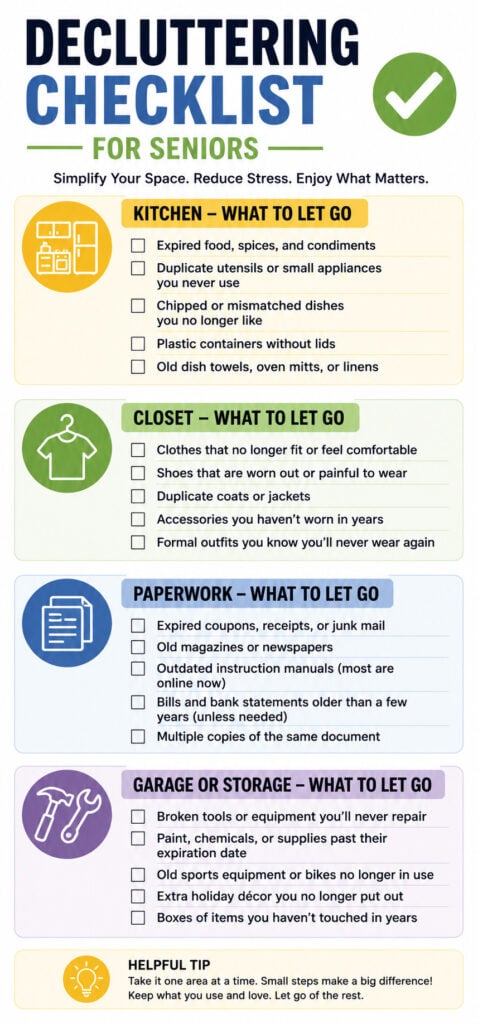
What to Let Go:
-
Expired food, spices, and condiments
-
Duplicate utensils or small appliances you never use
-
Chipped or mismatched dishes you no longer like
-
Plastic containers without lids
-
Old dish towels, oven mitts, or linens
What to Keep:
-
Every day dishes and utensils you actually use
-
One or two favorite pots and pans (not ten of the same size!)
-
Appliances you use weekly (coffee maker, toaster, slow cooker, etc.)
-
A small supply of food storage containers with matching lids
-
Linens in good condition
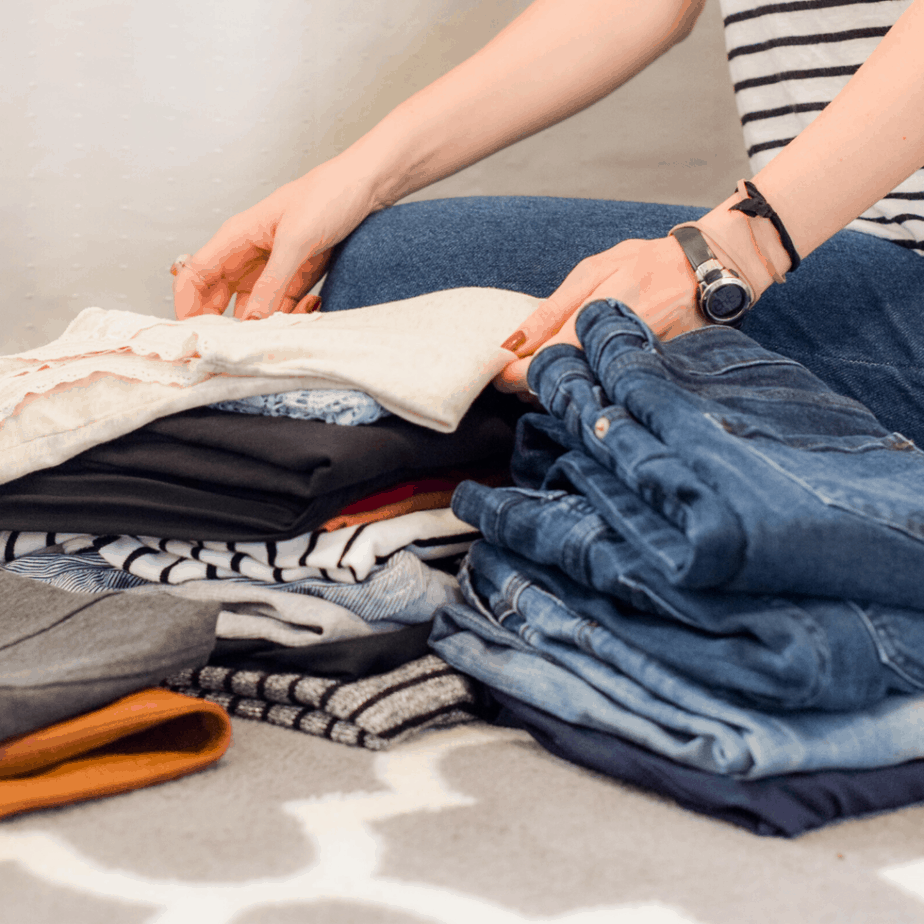
Closet
Closets are one of the easiest places to accumulate “just in case” items—clothes that don’t fit, shoes that hurt, or coats you never wear. A simplified wardrobe makes getting dressed each day stress-free.
What to Let Go:
-
Clothes that no longer fit or feel comfortable
-
Shoes that are worn out or painful to wear
-
Duplicate coats or jackets
-
Accessories you haven’t worn in years
-
Formal outfits you know you’ll never wear again
What to Keep:
-
Everyday clothes that fit and feel good
-
Comfortable shoes for walking or daily wear
-
A few versatile pieces for special occasions
-
Seasonal essentials like a warm coat or rain jacket
-
Accessories you truly enjoy wearing

Paperwork
Paper can pile up quickly, and it’s one of the most stressful types of clutter. Tackling paperwork helps you stay organized and prevents family members from being overwhelmed later on.
What to Let Go:
-
Expired coupons, receipts, or junk mail
-
Old magazines or newspapers
-
Outdated instruction manuals (most are online now)
-
Bills and bank statements older than a few years (unless legally needed)
-
Multiple copies of the same document
What to Keep:
-
Legal documents (will, power of attorney, property records)
-
Tax returns (keep at least 7 years)
-
Medical records and insurance information
-
Current bills and financial statements
-
A list of important accounts and contacts

Garage (or Storage Areas)
Garages and storage spaces often become the “catch-all” for decades of belongings. Clearing them out can free up space and make these areas safer to move around in.
What to Let Go:
-
Broken tools or equipment you’ll never repair
-
Paint, chemicals, or supplies past their expiration date
-
Old sports equipment or bikes no longer in use
-
Extra holiday decor you no longer put out
-
Boxes of items you haven’t touched in years
What to Keep:
-
Tools you actually use and are in good condition
-
Seasonal decor you love and display every year
-
Outdoor essentials (lawn mower, shovel, gardening tools)
-
Safety items (flashlights, batteries, first-aid kit)
-
A small number of keepsakes you truly treasure
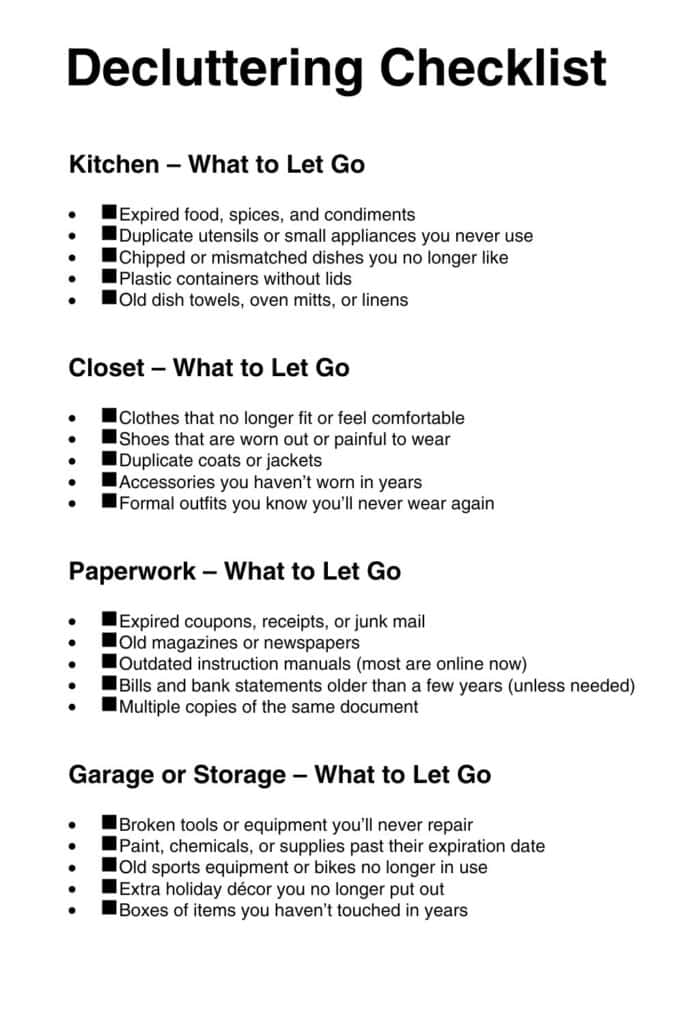
CLICK HERE TO DOWNLOAD THE PDF CHECKLIST
Final Thoughts
Decluttering as a senior isn’t about living with nothing—it’s about creating a home that feels lighter, safer, and easier to enjoy. Use this checklist as a guide, and go at your own pace. Even tackling one room a week can make a big difference.
Remember: every item you let go of is one less thing to clean, store, or worry about. Simplifying now is a gift to yourself—and to your loved ones.
If you need help decluttering, check out my ebook: Decluttering Made Simple: A Room-by-Room Plan to Clear Your Home & Your Mind