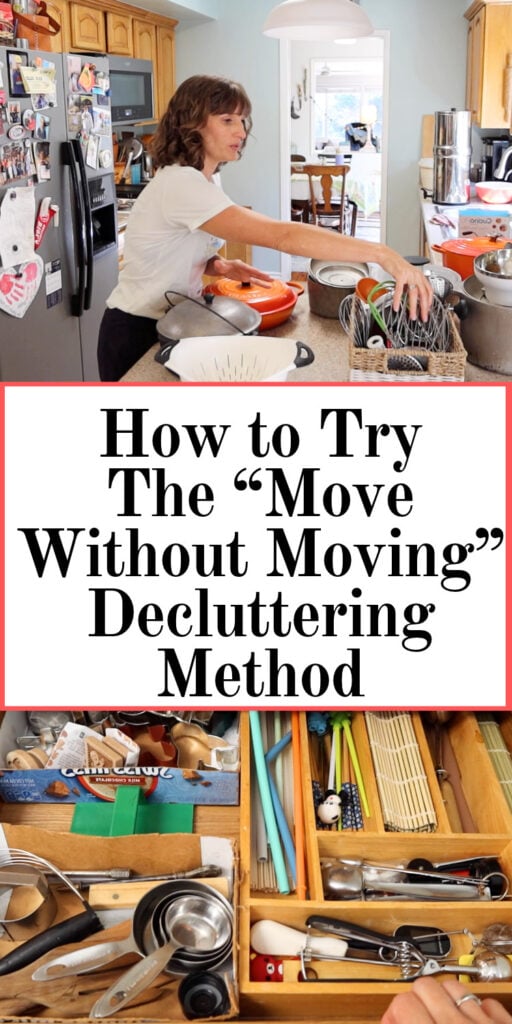
The “Move Without Moving” Decluttering Method
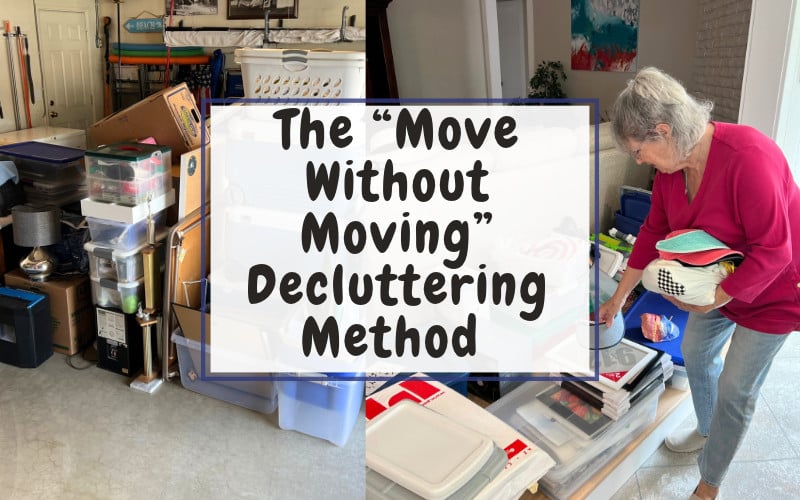
This is what I call the “Move Without Moving” Decluttering Method!
(I made this up, but I know there are similar ideas out there)
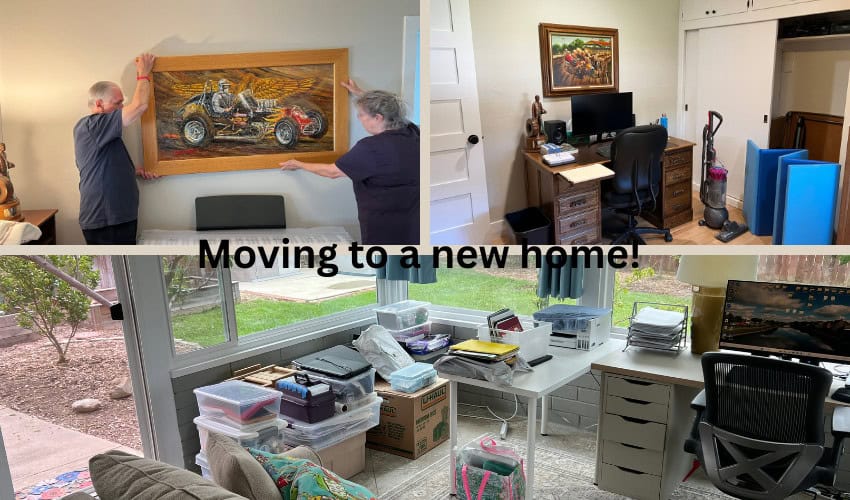
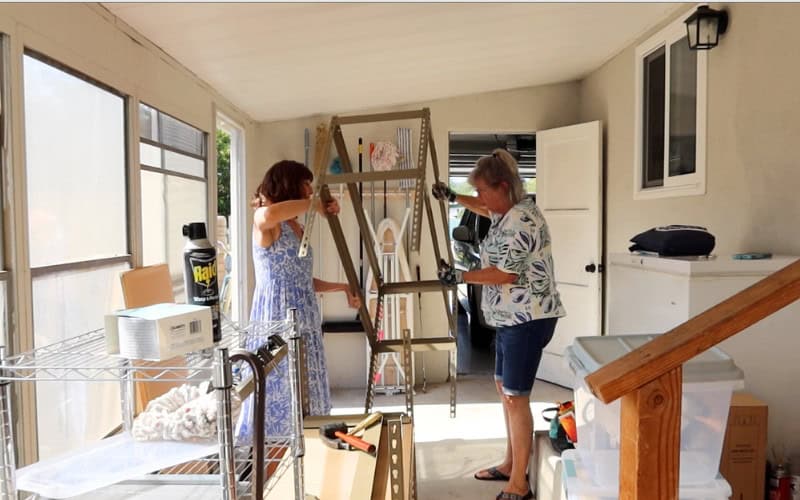
This idea came to me after I helped my parents downsize all their belongings and move into a smaller home.
What if you had to move out of your home next month?
And not just move, but move into a smaller home.
What would you actually take with you?
After helping my parents declutter and downsize from the home they had lived in for decades, I’ve realized that moving has a way of completely changing how you look at your belongings.
Suddenly, the question isn’t just:
“Should I get rid of this?”
It’s:
“Would I actually pack this, move it, unpack it, and find a place for it in my new home?”
Those are two very different questions.
And you don’t actually have to be moving to use this way of thinking.
I call it the Move Without Moving Decluttering Method.
The idea is simple: pretend you’re moving to a smaller home and use that imaginary move to decide what is really worth keeping.
It can be a surprisingly effective way to see your belongings differently, especially when you’ve become so used to the things around you that you don’t even notice them anymore.
What Is the Move Without Moving Decluttering Method?
Imagine you’ve just found out you’re moving.
Your new home is nice, but it’s smaller than your current home. You won’t have as many closets, cabinets, shelves, or storage spaces.
Now walk through your current home and imagine packing it.
What would definitely come with you?
What would you hesitate to put into a box?
What would you look at and think, I’m not moving that?
That’s where the decluttering begins.
Instead of deciding what you can get rid of, you’re deciding what deserves to come with you.
Of course, you’re not actually packing your house. This is simply a mental exercise that helps you look at your belongings with fresh eyes.
Why Pretending to Move Can Make Decluttering Easier
One of the hardest things about decluttering is that everything already has a place.
The dishes are in the cabinet. The clothes are hanging in the closet. The boxes are stacked in the garage.
Even if we haven’t used something in years, it doesn’t necessarily feel like it’s causing a problem.
But moving adds another question:
Is this worth the effort of taking with me?
Imagine wrapping that serving dish, putting it into a box, carrying the box to another house, unpacking it, and then finding somewhere to store it.
Would you still want it?
If yes, great. Keep it.
But sometimes imagining that entire process makes you realize that you’ve been storing something simply because it was already there.
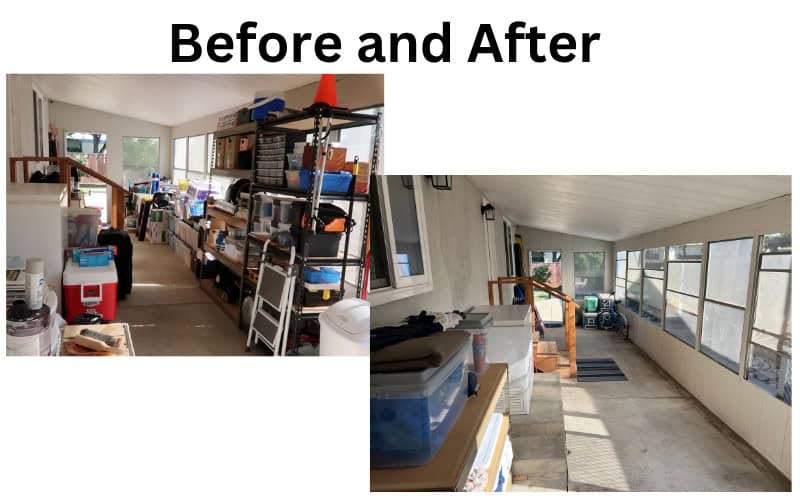
What I Learned From Helping My Parents Downsize
I’ve learned a lot about decluttering from helping my parents downsize.
They had lived in the same home for around 35 years, and when you live somewhere that long, it’s completely normal for things to accumulate.
You have plenty of time to put something into a cabinet, garage, closet, or drawer and then forget about it.
But when you’re actually moving, every single thing eventually has to be dealt with.
You have to pack it, donate it, sell it, give it away, recycle it, throw it away, or move it.
There is no option to simply leave everything where it is.
That experience made me realize something:
You don’t have to wait until you’re moving to make those decisions.
You can ask the same questions right now.
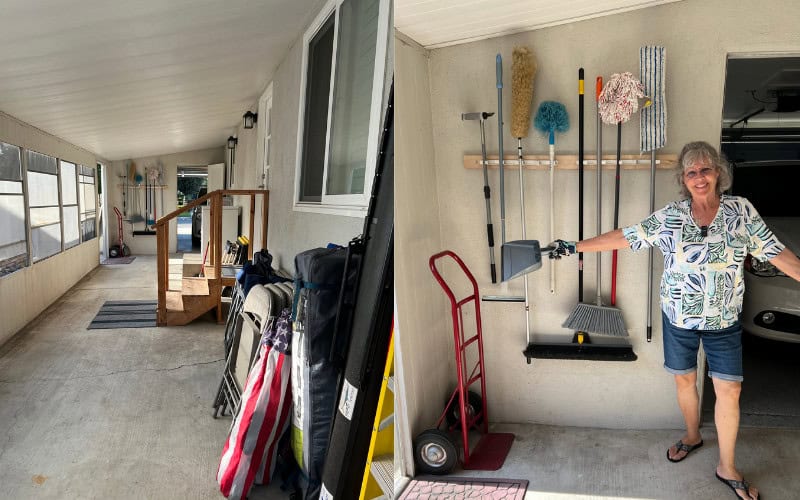
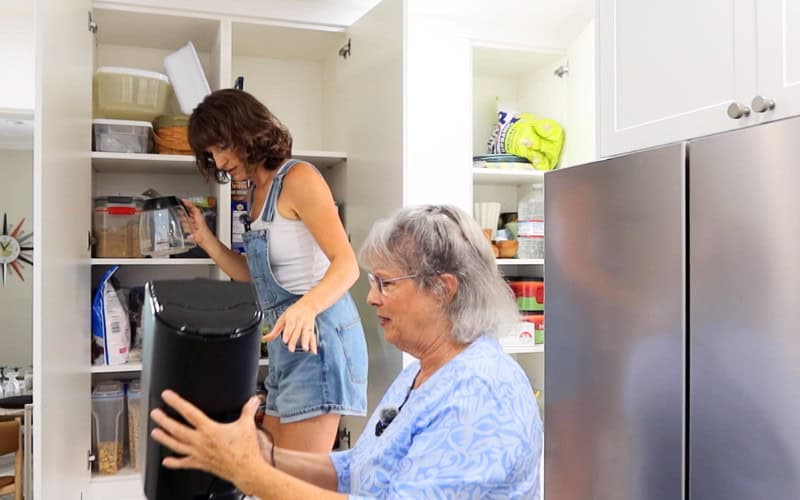
This is my mom’s new organized home!
Start by Imagining Your New Home
Before you start decluttering, picture it in your mind.
Imagine you’re moving somewhere with less storage than you have now.
Maybe your new kitchen has fewer cabinets.
Maybe there’s only one linen closet.
Maybe the bedroom has a smaller closet.
Maybe you won’t have a garage or large storage room.
You don’t need to invent an exact floor plan. You simply want to remove the assumption that everything can automatically come with you.
Then choose one small area of your home and begin.
1. Would I Pack This?
This is the first and easiest question.
If you were moving next month, would you put this item into a moving box?
Imagine doing the actual work.
Would you wrap it?
Would you pay for packing materials?
Would you carry it?
Would you make room for it in the moving truck?
Sometimes the answer becomes obvious very quickly.
2. Would I Pay Someone to Move This?
Here’s another way to think about it.
Imagine you’re paying movers based partly on how much stuff you have.
Would you pay someone to move this item across town?
What if you were moving across the country?
This can be especially helpful with large or heavy belongings.
That piece of furniture sitting in the garage suddenly looks very different when you imagine paying someone to haul it hundreds of miles.
3. Where Would I Put This in the New House?
It’s easy to keep something when it already has a storage spot.
But imagine starting over.
Where would you intentionally put this item in your new home?
Would you give it valuable closet space?
Would you put it in a kitchen cabinet?
Would you devote a shelf to it?
If you can’t imagine wanting to find space for it again, ask yourself why you’re giving it space now.
4. Would I Unpack This Right Away?
Think about moving into a new home and opening boxes.
Some things would come out immediately.
Your everyday dishes. Favorite clothes. Coffee maker. Towels. Bedding. Things you use all the time.
Other boxes might sit unopened for months.
And that’s interesting.
If you could comfortably live for months without opening a particular box, how necessary were those things in the first place?
5. Would I Be Excited to See This Again?
One thing I love about unpacking after a move is rediscovering the things you genuinely love.
There are certain belongings you’d be happy to see come out of a box.
Those are probably worth keeping.
But if you imagine unpacking something and thinking, Why did I bring this?, that’s useful information too.
6. Would I Replace This if It Got Lost in the Move?
Imagine the box containing this item disappeared during the move.
Would you replace it?
Would you even notice?
This question can be surprisingly helpful with kitchen gadgets, extra linens, books, clothes, decorations, hobby supplies, and things stored in garages.
If you wouldn’t miss it enough to replace it, consider whether you need to continue storing it.

7. Am I Keeping This Because I Have the Space?
Sometimes we keep things simply because we can.
There’s room in the garage.
There’s an empty shelf in the closet.
There’s space in the attic.
But having enough room for something isn’t necessarily a reason to keep it.
If you moved somewhere smaller tomorrow, would this item survive the move?
If not, maybe you don’t need to wait for a smaller house to let it go.
Try the Moving Method One Room at a Time
You don’t need to pretend you’re moving your entire house in one weekend.
Choose one room.
You could even choose one cabinet or closet.
Stand at the entrance and imagine the room completely empty.
Now ask:
If I were moving, which of these things would I intentionally bring into my new home?
Start with the obvious yeses.
Then look at what’s left.
You may be surprised by how much easier it is to identify the things you don’t really care about.
Try It in Your Kitchen
The kitchen is a great place to experiment with this method because we tend to accumulate so many duplicates and specialty items.
Imagine your new kitchen has 30 percent fewer cabinets.
Which dishes would you pack?
Which pots and pans?
How many mugs?
Which small appliances?
Would you carefully pack the kitchen gadget you haven’t used in five years?
Would all 15 food storage containers make the move?
Thinking about a smaller kitchen forces you to prioritize the things you actually use.
Try It in Your Closet
Now imagine your new closet is half the size.
Which clothes are important enough to bring?
Start with the clothes you wear all the time.
Then your favorites.
Then the things you genuinely need for work, special occasions, weather, or activities.
Eventually, you’ll get to the clothes you’re keeping because maybe someday you’ll wear them.
Would you pack those?
Try It in the Garage
This might be one of the best places to use the moving method.
Imagine your new home doesn’t have a garage.
What would you do with everything that’s currently in yours?
Tools you use regularly would probably come.
But what about old project supplies?
Broken things you planned to repair?
Boxes you haven’t opened in years?
Furniture you’re saving just in case?
If you wouldn’t pay to move it and wouldn’t want to find room for it at the new house, that’s worth thinking about.

Try It With Sentimental Items
Sentimental items are harder, and I wouldn’t start here.
But once you’ve practiced the method in easier areas, it can help with sentimental belongings too.
If you were downsizing significantly, which sentimental items would absolutely come with you?
Which family photos?
Which childhood keepsakes?
Which things from your kids?
Which inherited items?
You’re not trying to get rid of everything sentimental.
In fact, the opposite can happen.
When you choose the sentimental things that mean the most to you, they become more important because they’re no longer buried among hundreds of things you’re keeping out of obligation.
Don’t Pretend Everything Is Easy to Replace
There’s one important distinction I would make with this method.
The goal isn’t to get rid of anything you could theoretically buy again.
Some things are expensive, difficult to replace, seasonal, or rarely used but genuinely necessary.
If you use a tool once a year but it saves you from hiring someone, keeping it might make perfect sense.
If you have extra bedding because guests regularly stay with you, that’s useful.
This isn’t about forcing yourself to own as little as possible.
It’s simply a way to separate “I want or need this” from “this has been sitting here for years, so I guess I’ll keep it.”
Create a Pretend Moving Box
If you’re struggling with a category, try taking the exercise one step further.
Get an empty box and pretend you’re packing.
Choose the things you would definitely move first.
For example, if you’re decluttering books, fill the box with the books you’d absolutely take to your new home.
If you’re working on your kitchen, choose the things you’d want unpacked first.
If you’re going through decorations, choose the ones you’d be excited to decorate your new home with.
Once you’ve selected your favorites, look at what’s left.
Those decisions may suddenly become much easier.
The Things We Own Eventually Have to Be Dealt With
Helping my parents move reinforced something I think about often now:
Eventually, everything we own has to be dealt with.
Maybe we’ll use it.
Maybe we’ll donate it.
Maybe we’ll sell it.
Maybe we’ll give it to our kids.
Maybe we’ll move it.
Or someday someone else will have to decide what to do with it.
That’s not meant to make decluttering feel depressing. For me, it actually makes simplifying feel more practical.
If I already know I don’t want something, why store it for another 10 or 20 years?
Why not make that decision now?
You Don’t Have to Move to Start Living With Less
One of the biggest lessons I’ve learned from watching my parents downsize is that moving forces you to make decisions that are very easy to postpone when you’re staying in the same house.
But we don’t have to wait for a move.
We can use the same mindset right now.
Pick one drawer, cabinet, closet, or room and pretend you’re packing it for a smaller home.
Ask yourself:
Would I pack this?
Would I pay to move it?
Would I make room for it again?
Would I be happy to unpack it?
You don’t have to get rid of everything that gives you pause. But pay attention to the things you immediately know you wouldn’t bother moving.
Those might be some of the easiest things to declutter.
And the best part is that after you’re finished, you don’t have to go anywhere.
You get to stay in the home you already love, just with a little less stuff in it.