15 Tips to Help Seniors Declutter
15 Simple Tips to Help Seniors Declutter Their Home
Decluttering can feel overwhelming at any age, but for seniors, it often comes with unique challenges. Years of accumulated belongings, sentimental attachments, physical limitations, and uncertainty about where to start can make the process feel daunting.
The good news is that decluttering doesn’t have to happen all at once. In fact, the most successful decluttering journeys often happen slowly and intentionally. Whether you’re planning to age in place, preparing for a future move, or simply wanting a more peaceful home, small steps can make a big difference.
If you’re ready to simplify your space, these 15 simple tips can help make the process easier and less stressful.
1. Start Small
One of the biggest mistakes people make is trying to declutter an entire house in a weekend.
Instead, choose a small area such as:
- One drawer
- One shelf
- One countertop
- One nightstand
Completing a small project builds momentum and confidence for larger areas later.
2. Focus on Safety First
As we get older, creating a safe home becomes increasingly important.
Look for:
- Tripping hazards
- Cluttered walkways
- Loose rugs
- Stacks of papers
- Items blocking the stairs
Removing these hazards can make your home safer while providing an immediate sense of accomplishment.
3. Declutter for the Life You Live Today
Many seniors hold onto items for activities they no longer enjoy or hobbies they no longer pursue.
Ask yourself:
“Does this support the life I’m living now?”
If not, it may be time to let it go and make room for the things that truly add value to your current lifestyle.
4. Set a Timer
Decluttering for hours at a time can be exhausting.
Try setting a timer for:
- 15 minutes
- 20 minutes
- 30 minutes
When the timer ends, stop and celebrate your progress.
Small, consistent sessions often produce better results than marathon decluttering days.
5. Ask Yourself Simple Questions
Complicated decision-making can lead to frustration.
Keep it simple:
- Do I use this?
- Do I love this?
- Would I buy it again today?
- Does it serve a purpose in my life?
If the answer is no, it may be time to let it go.
6. Create an Easy Donation System
Keep a donation box or bag in a convenient location.
Whenever you find something you no longer need, place it directly into the box.
This eliminates the need to make multiple decisions later and keeps clutter from piling back up.

7. Don’t Start with Sentimental Items
Photos, keepsakes, family heirlooms, and memorabilia are often the hardest items to declutter.
Begin with easier categories like:
- Expired products
- Duplicate kitchen items
- Old magazines
- Worn clothing
Building decluttering confidence first makes sentimental decisions easier later.
8. Let Go of “Just in Case”
Many homes contain items saved for a future possibility that never arrives.
Ask yourself:
“When was the last time I needed this?”
If it has been years, you may be keeping it for a situation that is unlikely to happen.
Most items can be borrowed, rented, or replaced if needed.
9. Give Yourself Permission to Keep Meaningful Things
Decluttering doesn’t mean getting rid of everything.
It’s perfectly okay to keep items that truly bring joy or hold significant meaning.
The goal isn’t minimalism.
The goal is to create a home that feels manageable and peaceful.

10. Take Photos of Special Memories
Sometimes it’s not the object itself we want to keep—it’s the memory attached to it.
Consider taking photos of:
- Children’s artwork
- Old trophies
- Family keepsakes
- Collections
The memory can remain even if the physical item doesn’t.
11. Focus on One Category at a Time
Instead of moving from room to room, try working by category.
Examples include:
- Shoes
- Books
- Kitchen gadgets
- Towels
- Holiday decorations
Seeing all similar items together often makes it easier to decide what to keep.

12. Involve Family When Appropriate
Family members may appreciate the opportunity to choose meaningful items before a future move or estate settlement.
Having these conversations now can:
- Preserve family stories
- Reduce future stress
- Help you understand what others actually want
Many seniors are surprised to learn their children don’t want as many possessions as expected.
13. Celebrate Progress, Not Perfection
Decluttering isn’t about creating a picture-perfect home.
Every item removed creates:
- More space
- Less maintenance
- Less cleaning
- Less stress
Focus on the progress you’ve made rather than what remains.
14. Think About Future You
One helpful question is:
“Will this make my life easier or harder five years from now?”
Keeping future needs in mind can provide motivation to simplify today.
Many seniors find that less clutter means more freedom, flexibility, and peace of mind.
15. Remember Why You’re Decluttering
When decisions become difficult, return to your reason for simplifying.
Maybe you want:
- A safer home
- Less cleaning
- Easier maintenance
- More room for hobbies
- A future move to be easier
- To reduce the burden on loved ones
Keeping your “why” in mind helps you stay motivated throughout the process.
NEED MORE HELP? READ THE FULL GUIDE TO DECLUTTERING WHEN YOU’RE OVER 65
The Benefits of Decluttering as a Senior
Decluttering isn’t simply about getting rid of stuff.
Many seniors discover benefits such as:
- Reduced stress
- Improved safety
- Easier cleaning
- Greater peace of mind
- More usable living space
- Less decision fatigue
- Easier downsizing in the future
Perhaps most importantly, decluttering allows you to focus less on managing possessions and more on enjoying your life.
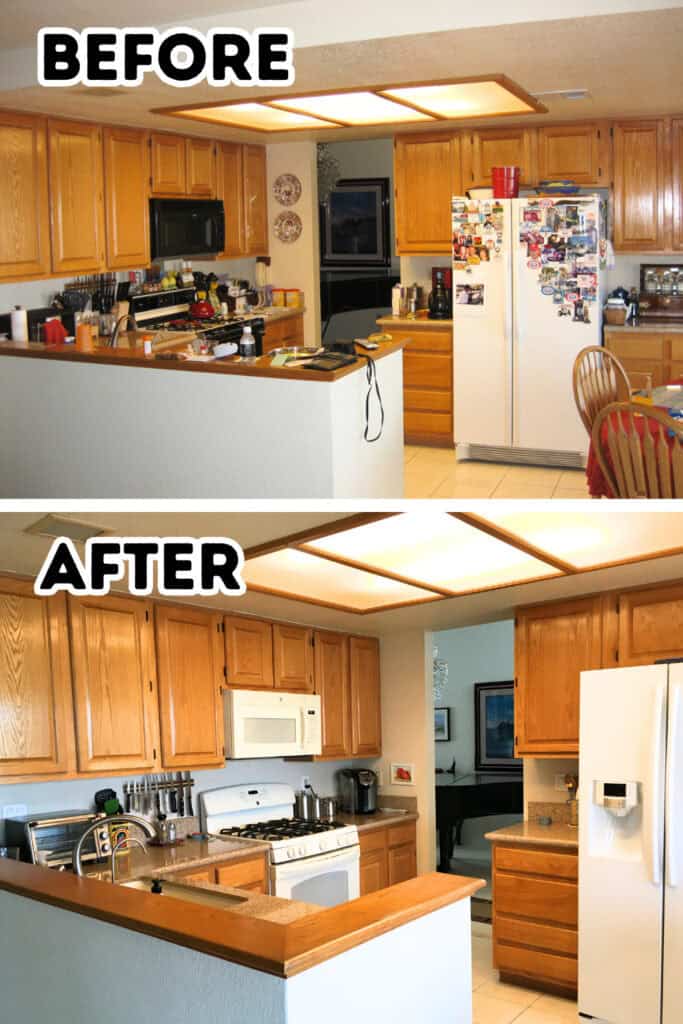
This is my parents’ kitchen before and after decluttering! You can see what a difference it makes.
Final Thoughts
Decluttering a lifetime of belongings can feel overwhelming, but it doesn’t have to happen overnight. Small steps taken consistently can lead to remarkable progress over time.
Start with one drawer. One shelf. One box.
As your home becomes lighter and more manageable, you may discover that decluttering isn’t really about getting rid of things. It’s about creating a home that better supports the life you want to live today and in the years ahead.
NOTE: I’m not over 65 myself, but I’ve been walking through the decluttering process alongside my parents, who are over 65, for the last five years. Together we’ve sorted through closets, garages, paperwork, and a lifetime of keepsakes. Everything I share here comes from real experience, not just theory. These are the tried-and-true tips and tricks that have truly worked for us and made life lighter, simpler, and more peaceful.