10 Minimalist Rules to Try for a Clutter-Free Home
10 Minimalist Rules to Try for a Clutter-Free Home
When I first started simplifying my home, I thought minimalism was mostly about getting rid of things. I quickly realized there was so much more to it than that.
Yes, decluttering is a big part of living with less, but what really makes a difference is changing the way we think about our stuff and the habits we create around it.
You can spend an entire weekend decluttering your home, but if you continue shopping the same way, holding onto things you don’t need, and bringing more stuff into your space, eventually the clutter will return.
That’s why I love having a few simple minimalist rules to follow.
These aren’t strict rules that you have to follow perfectly. They’re more like guidelines that can help you make better decisions about what you keep, what you buy, and how you manage your home.
And the best part is that you don’t have to consider yourself a minimalist to benefit from them.
Here are 10 minimalist rules worth trying if you want to own less, spend less, and enjoy a simpler home.
1. Make Your Home Work for the Life You’re Living Now
One of the biggest lessons I’ve learned from decluttering is that our homes should support the life we’re living today, not the life we used to live or the life we imagine we might have someday.
It’s easy to hold onto things from previous seasons of life.
Maybe you have supplies from a hobby you no longer enjoy, clothes that don’t fit your current lifestyle, or furniture that worked perfectly in your old home but doesn’t make sense in your current space.
Sometimes we keep these things because they’re still perfectly good. Other times, we’re holding onto the idea of who we used to be.
But just because something was useful in the past doesn’t mean you have to keep it forever.
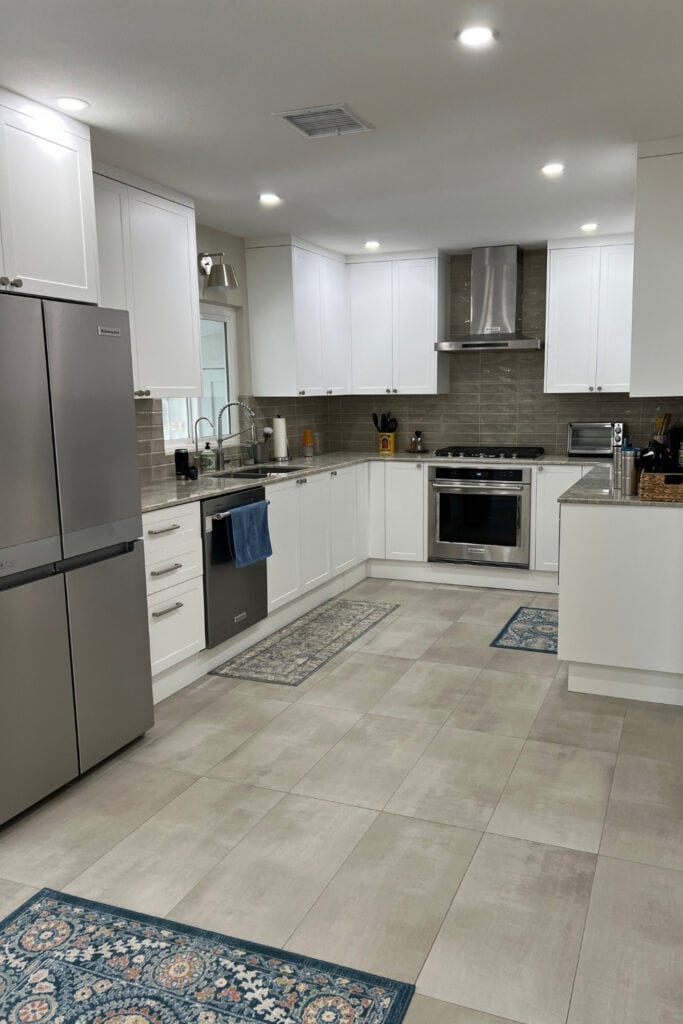
I’ve been reminded of this as we’ve made changes to the rooms in our home. Sometimes the best way to make a space function better isn’t to buy something new. It’s to rethink how we’re using what we already have.
Minimalist rule to try: Ask yourself, “Does this item make sense for the life I’m living right now?”
If the answer is no, it might be time to let it go.
2. Declutter Before You Organize
This is one of my favorite rules because I think it’s where so many people go wrong when they’re trying to simplify their homes.
They start by buying organizing bins, baskets, drawer dividers, and storage containers.
But here’s the problem: organizing things you don’t need doesn’t actually solve your clutter problem.
It just makes your clutter look a little nicer.
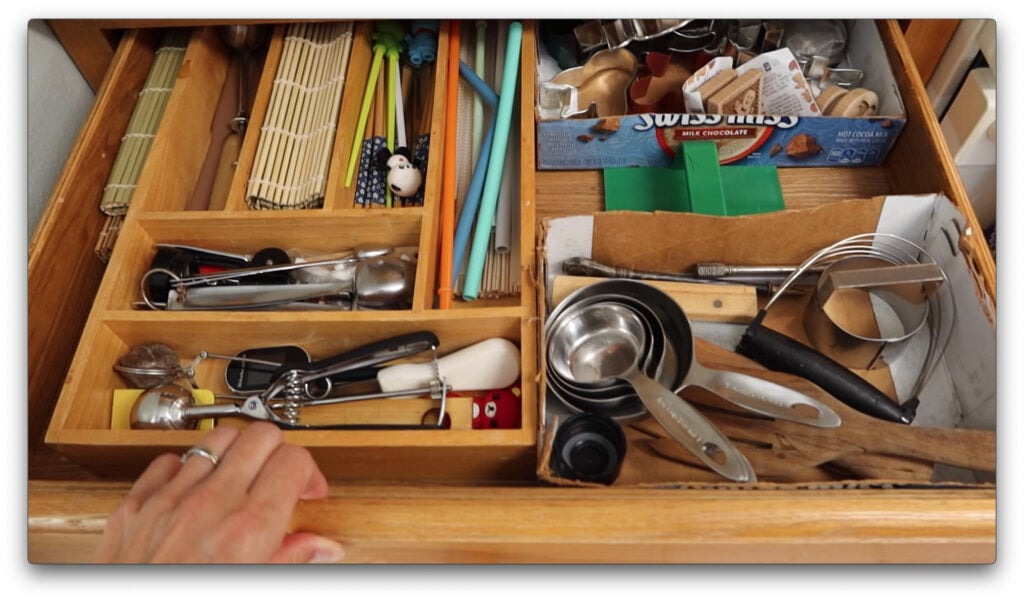
I’ve found that the easiest way to organize a space is to first remove everything you no longer want or use.
Once you’ve decluttered, you might discover that you don’t need any new organizing products at all.
Maybe your kitchen drawers suddenly have plenty of room. Maybe your closet doesn’t need extra storage. Or maybe that overflowing cabinet becomes easy to manage once you’ve removed the things you never use.
Minimalist rule to try: Before buying anything to organize a space, declutter it completely and see what storage you actually need.
You might be surprised by how much easier organizing becomes when you own less.
3. Give Everything a Home
One of the simplest ways to keep a home clutter-free is to make sure everything has a designated place to go.
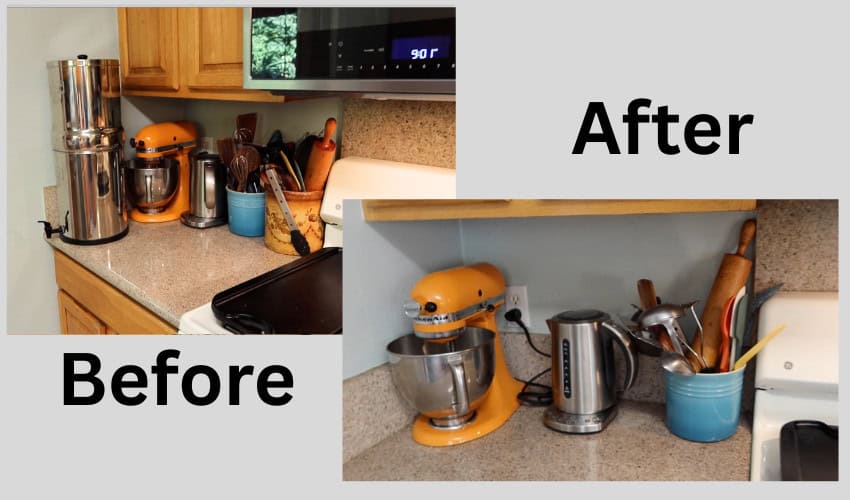
Think about the things that constantly end up sitting on your kitchen counters, dining table, or entryway.
Are they there because nobody bothered to put them away? Or are they there because they don’t really have a place to go?
Sometimes the problem isn’t that we’re messy. It’s that we have too much stuff for the storage space we have.
When everything has a home, cleaning up becomes so much easier.
You don’t have to make decisions every time you pick something up. You already know where it belongs.
This is especially helpful in a family home because everyone can learn where things go.
Minimalist rule to try: Choose one clutter hotspot in your home and find a permanent home for the items that collect there.
If there isn’t enough room, consider whether you need to declutter that category.
4. Wait Before Buying Something New
One of the easiest ways to have less clutter is to stop unnecessary things from entering your home in the first place.
And this is something I think becomes even more important after you’ve spent time decluttering.
When you’ve worked hard to get rid of things, the last thing you want to do is immediately replace them with more stuff.
That’s why I like the idea of creating a waiting period before making purchases.
Instead of buying something the moment you see it, give yourself a little time to think.
For smaller purchases, maybe you wait 24 hours. For larger purchases, you might wait a week or even a month.
Often, that initial excitement wears off and you realize you don’t actually need the item.
You might even forget about it completely!
Minimalist rule to try: Put nonessential purchases on a wish list instead of immediately buying them.
Come back to the list later and see if you still want those things.
This simple habit can save money and prevent a surprising amount of clutter.

5. Start With Just 10 Minutes
One of the biggest mistakes people make when decluttering is thinking they need an entire day or weekend to make progress.
They look around at everything that needs to be done and feel so overwhelmed that they don’t start at all.
But you really don’t need hours of free time to simplify your home.
Some of my favorite decluttering projects are the small ones.
A bathroom drawer, one kitchen cabinet, a single shelf, or even just your purse.
These are all areas you can work on in 10 minutes or less.
And the great thing about starting small is that you can see results almost immediately.
Those small wins help build momentum.
Minimalist rule to try: Set a timer for 10 minutes and declutter one small area.
When the timer goes off, you can stop. If you’re feeling motivated, keep going.
The important thing is simply getting started.

6. Don’t Keep Something Just Because You Spent Money on It
This is a big one!
I think almost everyone has held onto something because they spent good money on it.
Maybe it’s an expensive piece of clothing you never wear, a kitchen gadget that seemed like a great idea, or a piece of furniture that doesn’t really work in your home.
You don’t want to get rid of it because it feels like you’re wasting money.
But here’s something I’ve learned: keeping an item you don’t use isn’t going to bring that money back.
The money was spent when you bought it.
Now the only decision you have to make is whether that item deserves to continue taking up space in your home.
And sometimes the best thing you can do is learn from the purchase and move on.
You could sell it, donate it, or give it to someone who will actually use it.
Minimalist rule to try: When you’re holding onto something because of what it cost, ask yourself, “If I didn’t already own this, would I buy it again today?”
If the answer is no, that can tell you a lot.
7. Make It a Habit to Put Things Away Right Away
Sometimes the biggest difference between a messy home and a tidy home comes down to a few tiny habits.
One of those habits is putting things away instead of setting them down to deal with later.
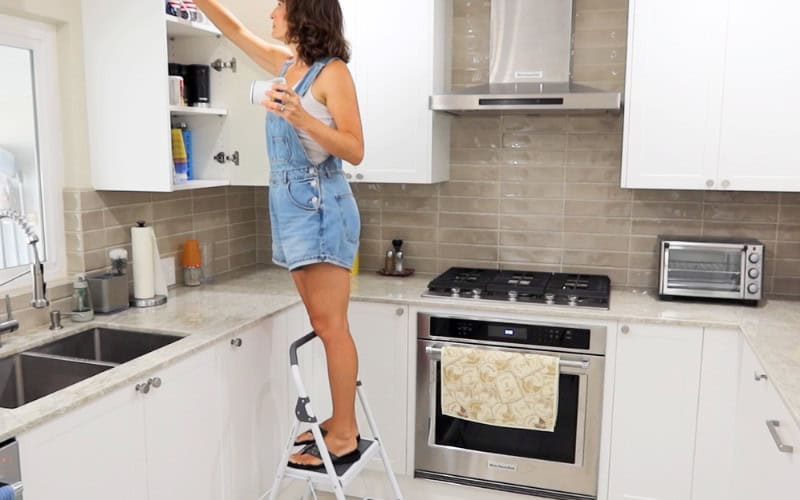
For example, when you come home, hang up your jacket instead of leaving it on a chair.
When you finish using something in the kitchen, put it back in the cabinet.
When you bring in the mail, sort through it instead of leaving it in a pile on the counter.
These little actions might only take a few seconds, but they can prevent a lot of unnecessary cleanup later.
Of course, nobody is going to do this perfectly all the time, especially in a busy family home.
But the more often you put things away as you go, the less time you’ll spend picking everything up at the end of the day.
Minimalist rule to try: For one week, make an effort to put things away immediately after using them.
Pay attention to whether it makes your daily cleaning routine easier.
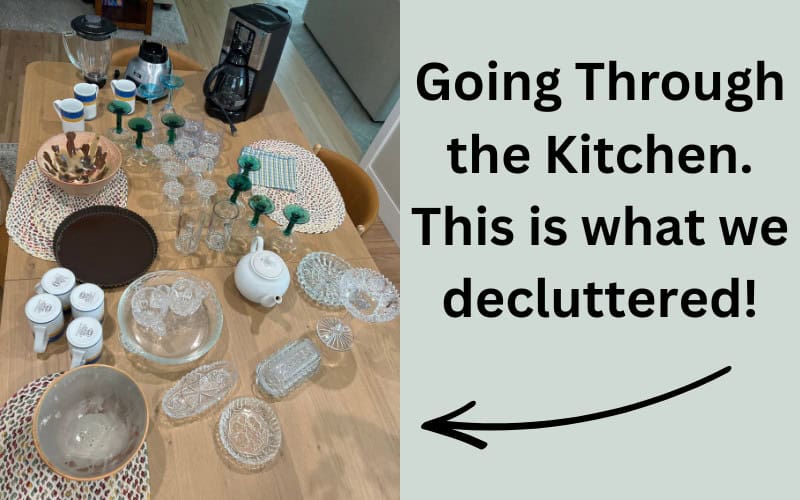
8. Remember That Everything You Own Requires Something From You
This is something I think about a lot when it comes to simple living.
Every item we bring into our home comes with some kind of responsibility.
It might need to be cleaned, maintained, stored, organized, repaired, or eventually replaced.
Even things we don’t use can take up valuable space and require our attention.
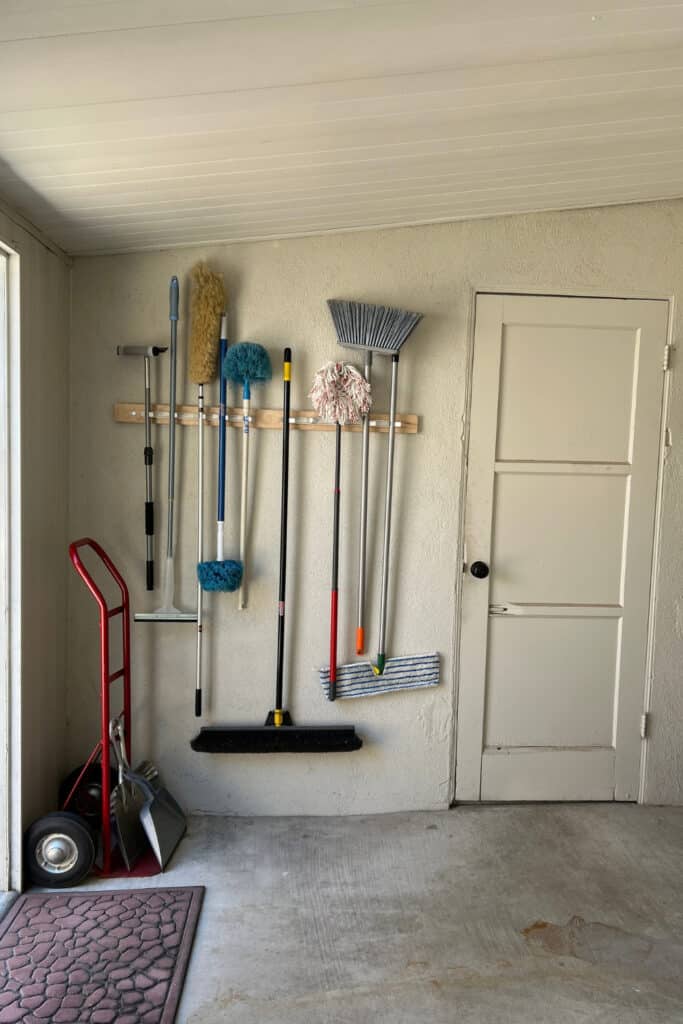
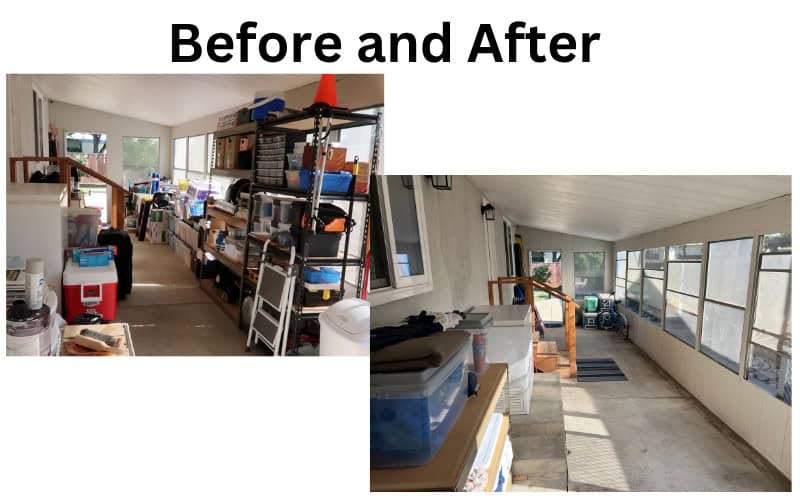
Think about a garage full of things you haven’t touched in years.
Those items might not seem like they’re affecting your daily life, but they’re taking up space that could be used for something else.
Or think about a closet packed with clothes. Having more choices doesn’t always make getting dressed easier. Sometimes it makes the process more complicated.
The more we own, the more we have to manage.
And personally, I’d rather spend my time doing things I enjoy than constantly managing stuff.
Minimalist rule to try: When deciding whether to keep something, ask yourself, “Is this item worth the space, time, and effort it takes to own it?”
This can completely change how you look at your belongings.

9. Try the One-In, One-Out Rule
Once you’ve decluttered your home, the next challenge is keeping it that way.
One simple habit that can help is the one-in, one-out rule.
The idea is that whenever you bring something new into your home, you let go of something you no longer need.
For example, if you buy a new pair of shoes, consider whether there’s an old pair you’re ready to donate.
If you replace your towels, get rid of the worn-out ones instead of stuffing them into the back of a cabinet.
If you buy a new kitchen gadget, take a look at the ones you already own.
Of course, this doesn’t have to be an exact rule for every purchase.
Sometimes you genuinely need something new without getting rid of anything else.
But it encourages you to be more aware of what’s coming into your home.
Minimalist rule to try: Choose one category, such as clothing, shoes, or kitchen items, and practice one-in, one-out for the next month.
This is especially helpful if you’ve already decluttered and want to maintain your progress.
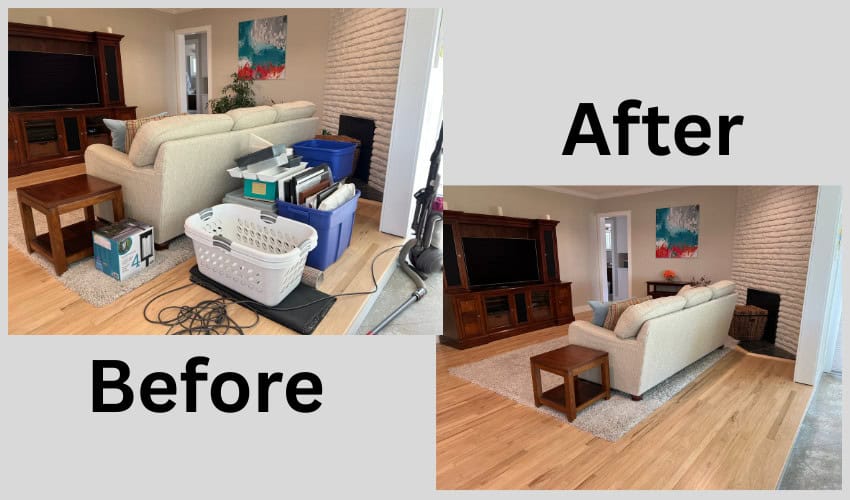
10. Keep What You Truly Use, Need, and Love
If there’s one minimalist rule I would encourage everyone to try, it’s this one.
Keep the things that actually add value to your life.
That doesn’t mean everything has to be practical or something you use every day.
I think sometimes people get the wrong idea about minimalism and assume that you have to get rid of anything decorative, sentimental, or unnecessary.
But that’s not how I look at simple living.
I love having a home that feels comfortable and welcoming. I enjoy decorating, having plants, and keeping things that make our home feel like ours.
The goal isn’t to own as little as possible.
The goal is to get rid of the excess so you have more room for the things that matter.
And that will look different for every person and every family.
Something that feels like clutter to one person might be something another person genuinely loves and uses.
Minimalist rule to try: As you declutter, ask yourself these three questions:
- Do I actually use this?
- Do I need this for my current lifestyle?
- Do I genuinely love having this in my home?
You don’t have to answer yes to all three questions. But if you can’t answer yes to any of them, it might be time to reconsider why you’re keeping that item.
Final Thoughts on These 10 Minimalist Rules
The thing I love most about minimalism is that it doesn’t have to be complicated.
You don’t need a perfectly organized home, empty countertops, or a certain number of possessions to enjoy the benefits of living with less.
And you definitely don’t have to follow every minimalist rule you hear about.
I think the best approach is to take the ideas that make sense for your life and leave the rest.
Maybe you’re in a season where you need to focus on getting rid of years of accumulated clutter. Or maybe you’ve already simplified your home and just need a few habits to keep things from piling up again.
Either way, small changes really can make a big difference over time.
My suggestion is to choose just one of these 10 minimalist rules and try it for the next week.
Don’t worry about doing everything at once.
Start small, see what works, and build from there.
Because at the end of the day, simple living isn’t about following a bunch of rules.
It’s about creating a home that is easier to manage and gives you more time and energy for the things you actually want to do.
Which of these minimalist rules would make the biggest difference in your home?
Read More About Decluttering:
The move without moving declutter method
How to Declutter a Small Kitchen